
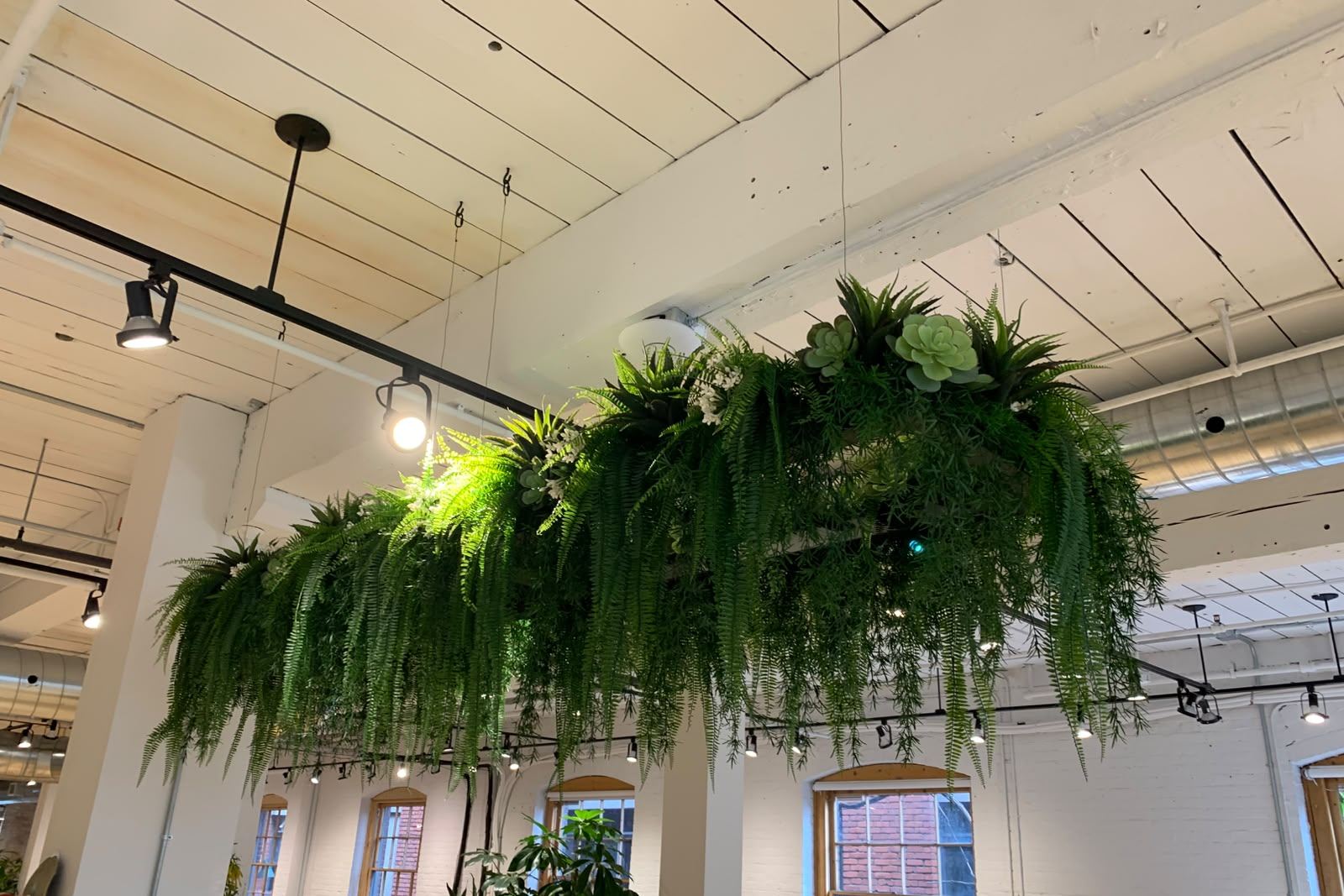
Artificial plant projects in Toronto office towers rarely stall over design. They stall over one line in an email from building management: is it fire-rated? That line tends to arrive late, after the corner has been chosen and the drawings approved, and if nobody can answer it, everything waits.
It is a fair question, and a much easier one to answer early than late. Here is what building management is usually asking, and how to get ahead of it.
Why building management asks about décor at all
A property manager is accountable for what goes into the building. Anything large, visible and semi-permanent tends to get a look before it lands on a floor, and greenery is all three.
So the question is rarely resistance. It is paperwork. Building management needs to know what is going in and whether it meets the standard that building works to. Every building sets its own bar, and only that building can tell you where its bar sits.
What "fire-rated" means in plain words
Fire-rated means a piece has been tested against a published standard and certified as meeting it. The one that comes up for décor in Canada is CAN/ULC-S109, the flame-resistance standard.
Certification is documented in a certificate. That document names the standard and lists the pieces it covers, so whoever approves your project can read it and keep it on file. A verbal assurance on a call does not do the same job.
Ask the building before you ask anyone else
Start with your property manager, not with a supplier. Ask what the building requires for décor, whose name the paperwork should be in, and who it should be sent to.
That one email early on shapes everything after it. It tells you exactly what to ask for, and it means nobody is chasing a document once the install is already booked. If you are the property manager in this conversation, our guide to plant programs in commercial buildings covers the wider picture.
What to ask whoever supplies the plants, us included
Once you know what the building wants, put the same questions to every supplier you are talking to, ours included. Ask them before anything is ordered, not after.
- Are these specific pieces certified to CAN/ULC-S109?
- Can I see the certificate now, rather than on delivery day?
- Does it cover the exact pieces on my order, and not a similar range?
- If they are not certified, will you tell me that plainly?
- What happens to the colour of these pieces in strong daylight?
A supplier who answers those questions straight is telling you something useful. So is one who cannot. Whatever paperwork you end up with, keep a copy with the building, where the people who approve things can find it.
Colour along the window line
The other question worth raising is how greenery holds its colour beside Toronto's glass. Strong daylight is hard on colour over time, on fabrics, on finishes and on greenery alike.
So it is worth settling placement before choosing anything, and asking whoever supplies it what happens to the colour of that particular piece in that particular spot. A bright south-facing sill and a windowless boardroom are two different briefs.
Planning artificial greenery for a Toronto office? Tell us about the space and what your building has asked for, and we will talk it through with you. Start with artificial plants for Toronto offices.
More on artificial plants