
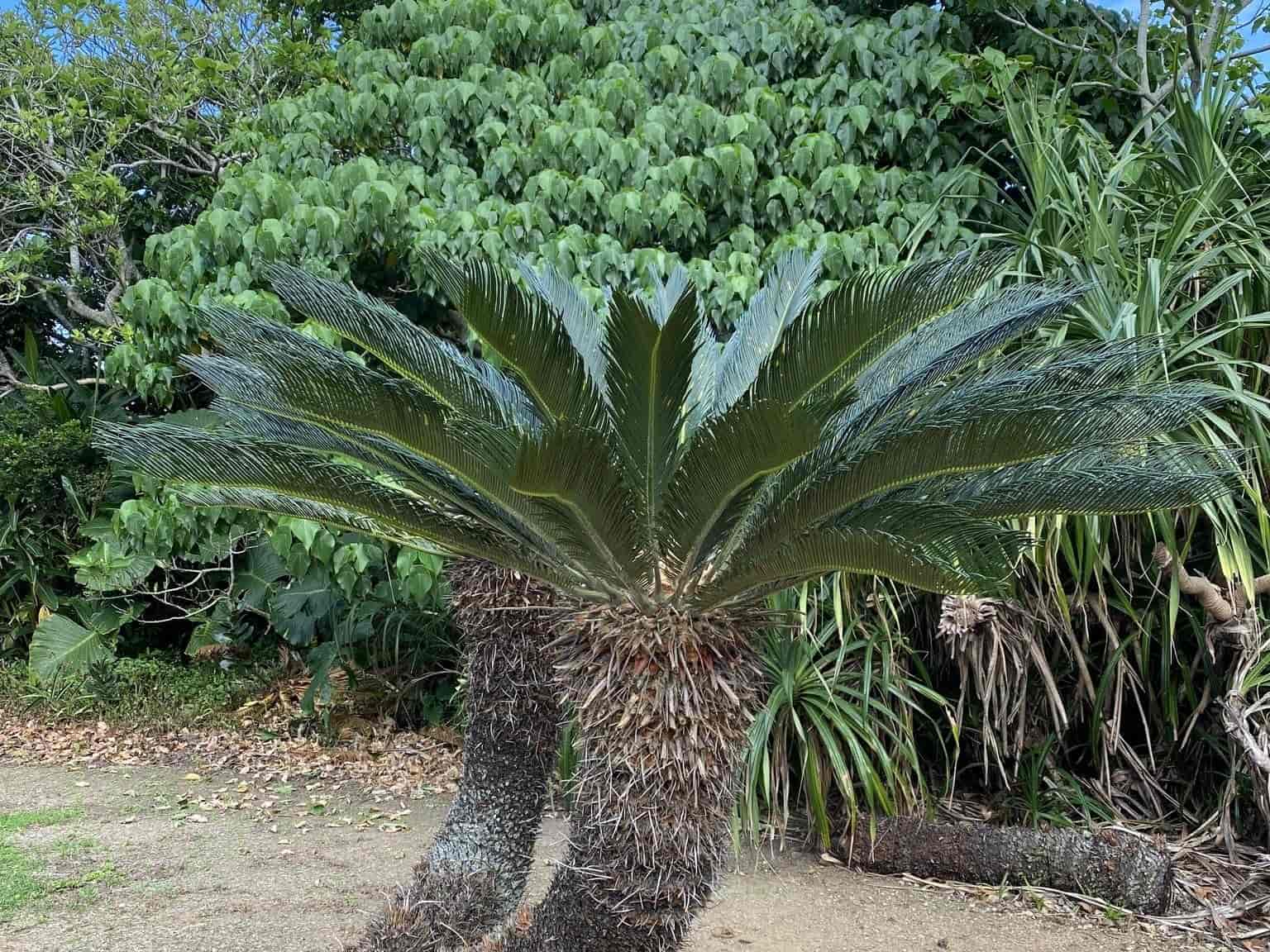
Sago Palm
Cycas revoluta — The Slow-Growing Statement Palm
Photo: SII Sachiyo · CC0
Light
Bright — needs strong indirect light or a few hours of direct sun. Tolerates medium light but growth becomes very slow and fronds may yellow.
Water
Let soil dry between waterings — Cycas is drought-tolerant with a large, water-storing trunk. Root rot is common if soil stays wet; ensure excellent drainage.
Humidity
Tolerates dry office air well. No misting needed.
Temperature
15–27°C (60–80°F). Keep well above freezing in winter.
Difficulty
Advanced
Sizes
Tabletop · Mid-floor · Floor specimen
Sago Palm, Cycas revoluta, is a slow-growing rosette of stiff, dark green pinnate fronds emerging from a rough, pineapple-like trunk. It produces one flush of new fronds a year, usually in spring, with the whole crown emerging at once, and it typically reaches 60–120 cm indoors over many years.
In the Office
It needs strong indirect light or a few hours of direct sun — in medium light it survives, but growth becomes very slow and fronds may yellow. It's highly toxic to cats, dogs, and humans if ingested, especially the seeds, so it needs a placement well out of reach and cleaning crews should be made aware it's there. Because it grows and recovers so slowly, it's better suited to a stable spot than somewhere it will be moved or bumped often.
Why Choose This Plant
Benefits for Your Office
- Stiff, dark green pinnate fronds give a striking architectural shape unlike a typical palm
- Slow, steady growth means it holds its look for years without frequent reshaping
- Tolerates dry office air well, with no misting needed
- A rough, pineapple-like trunk adds texture that reads as a specimen piece rather than filler
Where to Place It
Office Placement Ideas
- 1
Bright spots with strong indirect or a few hours of direct light — anything dimmer noticeably slows its growth
- 2
Well out of reach of pets and children, given how toxic it is if ingested
- 3
A stable, low-traffic spot, since it recovers slowly from any damage or disturbance
How to Care for It
Care Tips for Office Environments
- Remove yellowed lower fronds by cutting close to the trunk, but don't touch the green ones — it only produces a few each year
- Yellowing fronds can also signal a manganese deficiency, not just age, so don't assume it's simply old growth
- Check frond undersides and trunk crevices for scale insects, the main pest here
- Handle new frond flushes carefully as they unfurl in spring — they're fragile and slow to recover if damaged
Want Sago Palm in your office?
Our team will recommend the right variety and size for your space, deliver and install it, and keep it thriving with ongoing care.