
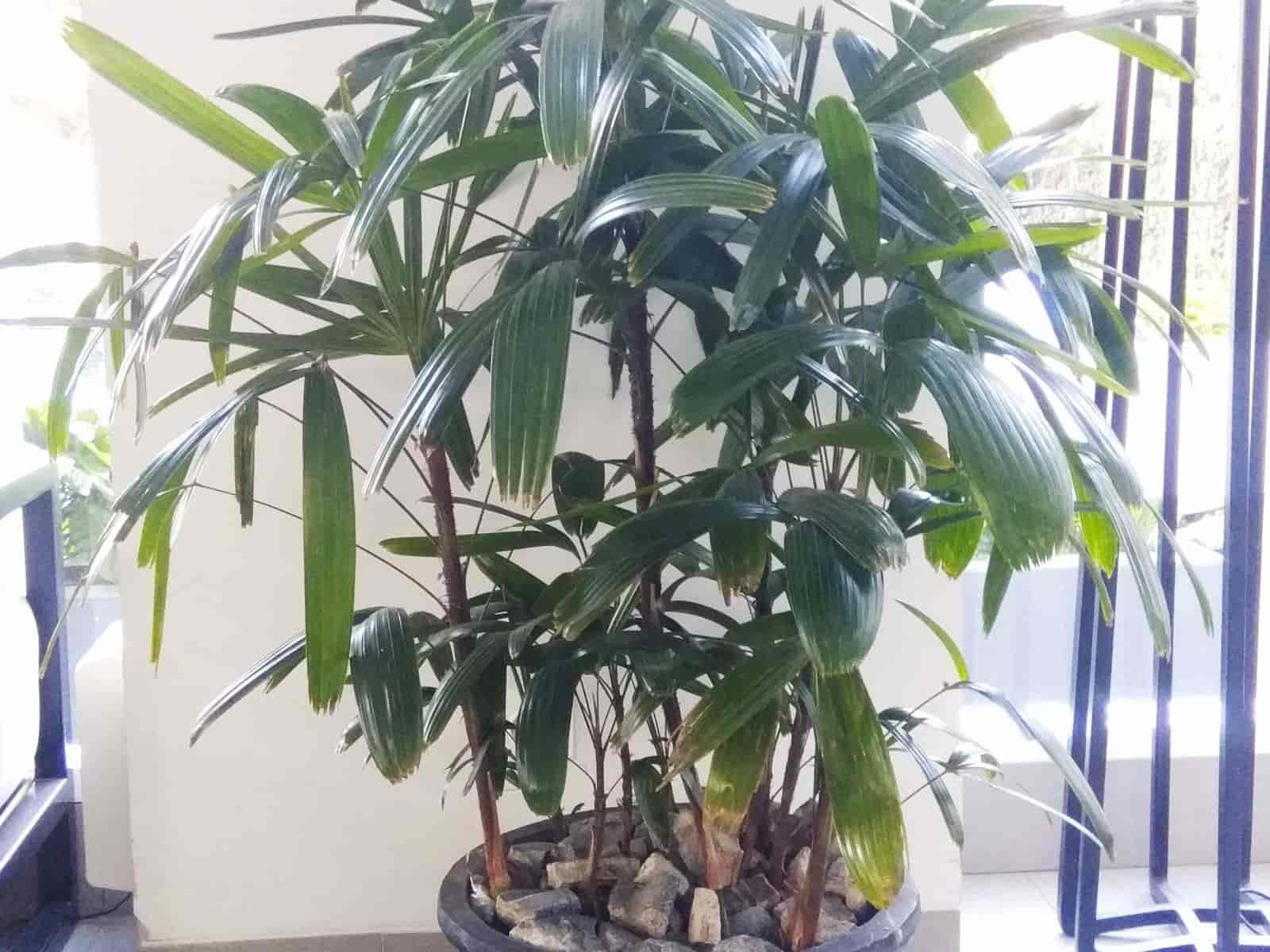
Rhapis Palm
Rhapis excelsa — The Dense Multi-Stem Screen Palm
Photo: source · CC BY-SA 4.0
Light
Medium light — needs a room with a window, not necessarily right next to it. Multi-stem structure stays full even if some fronds get less light.
Water
Water when the top few centimetres of soil are dry.
Humidity
Prefers moderate humidity. Mist or group plants through the heating season.
Temperature
18–27°C (65–80°F). Protect from cold drafts near entrances.
Difficulty
Moderate
Sizes
Tabletop · Mid-floor · Floor specimen
Rhapis excelsa, known as lady palm, is a multi-stem fan palm whose stems form a dense, layered screen rather than the single trunk of most indoor palms. It's a slow grower, and because cutting the crown kills that stem permanently, size needs to be chosen carefully at installation.
In the Office
It needs a room with a window, though not necessarily a spot right beside it — medium light is enough. Its multi-stem structure means the plant stays looking full even if some fronds get less light than others. It's pet-friendly and low-risk, with no skin irritation concerns, making it suitable for almost any office environment.
Why Choose This Plant
Benefits for Your Office
- Multi-stem form creates a natural screen or divider that a single-trunk palm can't
- Stays full-looking even when some fronds get less light, thanks to its dense, multi-stem structure
- Pet-friendly, with no skin irritation risk, suitable for any office environment
- One of the three standard commercial interior palms, alongside Kentia and Chamaedorea, chosen for reliability
Where to Place It
Office Placement Ideas
- 1
Room dividers or screening between desks — its dense, layered stems block sightlines naturally
- 2
Rooms with a window, even if not directly beside it — medium light is enough
- 3
Reception and waiting areas — pet-friendly and consistent-looking year to year
How to Care for It
Care Tips for Office Environments
- Never cut the crown — it kills that stem permanently, so choose size carefully at installation instead
- Remove yellowed lower fronds close to the stem, and cut dead stems off at the soil line
- Watch closely for spider mites — the fine leaf texture makes early infestations hard to spot, especially during heating season
- Check stems and frond undersides for scale insects during maintenance visits
Want Rhapis Palm in your office?
Our team will recommend the right variety and size for your space, deliver and install it, and keep it thriving with ongoing care.