
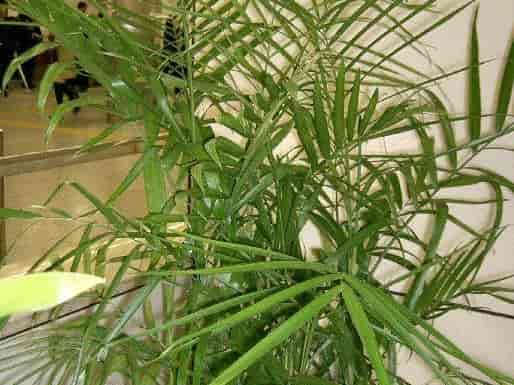
Seifrizzi Palm
Chamaedorea seifrizii — The Privacy Screen Palm
Photo: source · CC BY-SA 3.0
Light
Medium light — handles lower light better than Areca or Phoenix palms. Avoid direct sun, which browns the fronds.
Water
Chlorine-sensitive — brown tips are common; use filtered water. Reduce watering Nov-Mar as growth slows significantly.
Humidity
Prefers moderate humidity. Mist or group plants through the heating season.
Temperature
18–27°C (65–80°F). Protect from cold drafts near entrances.
Difficulty
Moderate
Sizes
Tabletop (under 4 ft) · Mid-floor (around 6 ft) · Floor specimen (8 ft+)
Known botanically as Chamaedorea seifrizii, bamboo palm is a clumping palm with thin, reed-like stems and feathery fronds, typically reaching 4–8ft. New stems emerge continuously at soil level, so losing one doesn't ruin the overall shape the way it would on a single-stem palm. It's grown commercially specifically for the dense screening effect a cluster of stems creates.
In the Office
It handles medium light better than Areca or Phoenix palms, making it a workable choice for rooms without the brightest window. It's non-toxic, so it's a safe pick for pet-friendly offices, and its clumping form suits screening off a space rather than standing alone as a specimen. Avoid direct sun, which browns the fronds.
Why Choose This Plant
Benefits for Your Office
- Non-toxic to cats and dogs, a safe choice for pet-friendly workplaces
- Tolerates medium light better than most palms, opening up more placement options
- Clumping habit creates natural screening, useful for softening sightlines between desks or zones
- Losing a single stem doesn't ruin the plant's shape, since new stems keep emerging at soil level
Where to Place It
Office Placement Ideas
- 1
Between workstations or open-plan desk clusters, where the dense stems screen sightlines without a solid wall
- 2
Corridors and transition spaces with medium indirect light, where brighter-light palms would struggle
- 3
Pet-friendly offices and family lounges, since it carries no toxicity risk
How to Care for It
Care Tips for Office Environments
- Water with filtered water where possible — this palm is sensitive to chlorine, and brown tips are the usual result
- Cut back watering from November to March, when growth slows right down for winter
- Check frond undersides for spider mites at every visit, especially from October through April
- Prune declining thin stems at the base — removing one won't affect the rest of the clump
Want Seifrizzi Palm in your office?
Our team will recommend the right variety and size for your space, deliver and install it, and keep it thriving with ongoing care.