
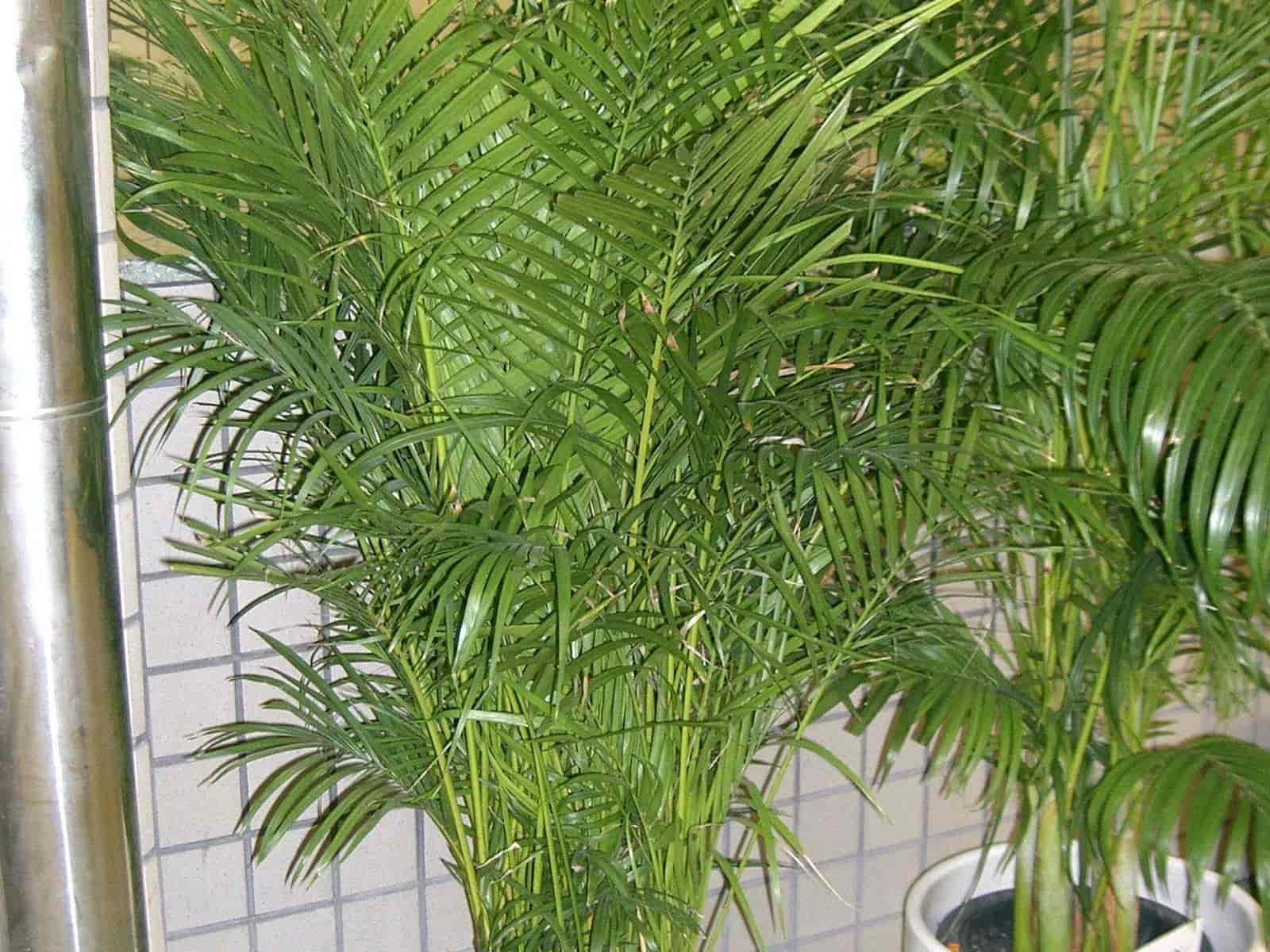
Areca Palm
Dypsis lutescens — The Pet-Friendly Golden Palm
Photo: source · CC BY-SA 3.0
Light
Medium to bright light — does not tolerate low light; if a site has marginal light, specify Kentia or Rhapis instead. Golden-yellow trunks develop best in bright conditions.
Water
Very susceptible to overwatering and root rot — yellow or brown leaves are the usual sign.
Humidity
Prefers moderate humidity. Mist or group plants through the heating season.
Temperature
18–27°C (65–80°F). Protect from cold drafts near entrances.
Difficulty
Moderate
Sizes
Tabletop (under 6 ft) · Mid-floor (around 7 ft) · Floor specimen (8 ft+)
Areca palm, or Dypsis lutescens, is a clumping, multi-stemmed palm with golden-yellow canes and feathery, arching fronds that fan out from the base. Well-grown specimens reach 6–8ft and read as lush and full, unlike the bare-trunk look of a single-stem palm. The trunk colour deepens toward gold in good light.
In the Office
Areca needs real light — it does not tolerate low light the way Kentia or Rhapis palms do, so it only belongs in a spot with a genuine window. It's non-toxic, which makes it a safe choice for pet-friendly offices and family-visited reception areas. In Toronto's darker winter months it can struggle without supplemental lighting, so factor that into where it goes.
Why Choose This Plant
Benefits for Your Office
- Non-toxic to cats and dogs, so it's a safe choice for pet-friendly offices
- Full, feathery form fills space without the bare-trunk look of a single-stem palm
- Golden canes add warm colour and texture against typical office finishes
- Fast-growing by palm standards, so it fills out visibly through the growing season
Where to Place It
Office Placement Ideas
- 1
Bright reception areas with direct window exposure, where the golden canes catch the light
- 2
Pet-friendly offices and family lounges, since it carries no toxicity risk
- 3
Sunny floor space near glass walls rather than interior corridors, which lack the light it needs
How to Care for It
Care Tips for Office Environments
- Brown frond tips are common and mostly cosmetic — trim along the natural frond shape rather than cutting straight across
- Feed it more often than slower-growing palms during the spring-to-fall growing season
- Check the undersides of fronds for spider mites regularly, especially through the dry heating months
- Watch soil for fungus gnats if it's been overwatered, and check stems and frond bases for scale insects
Want Areca Palm in your office?
Our team will recommend the right variety and size for your space, deliver and install it, and keep it thriving with ongoing care.