
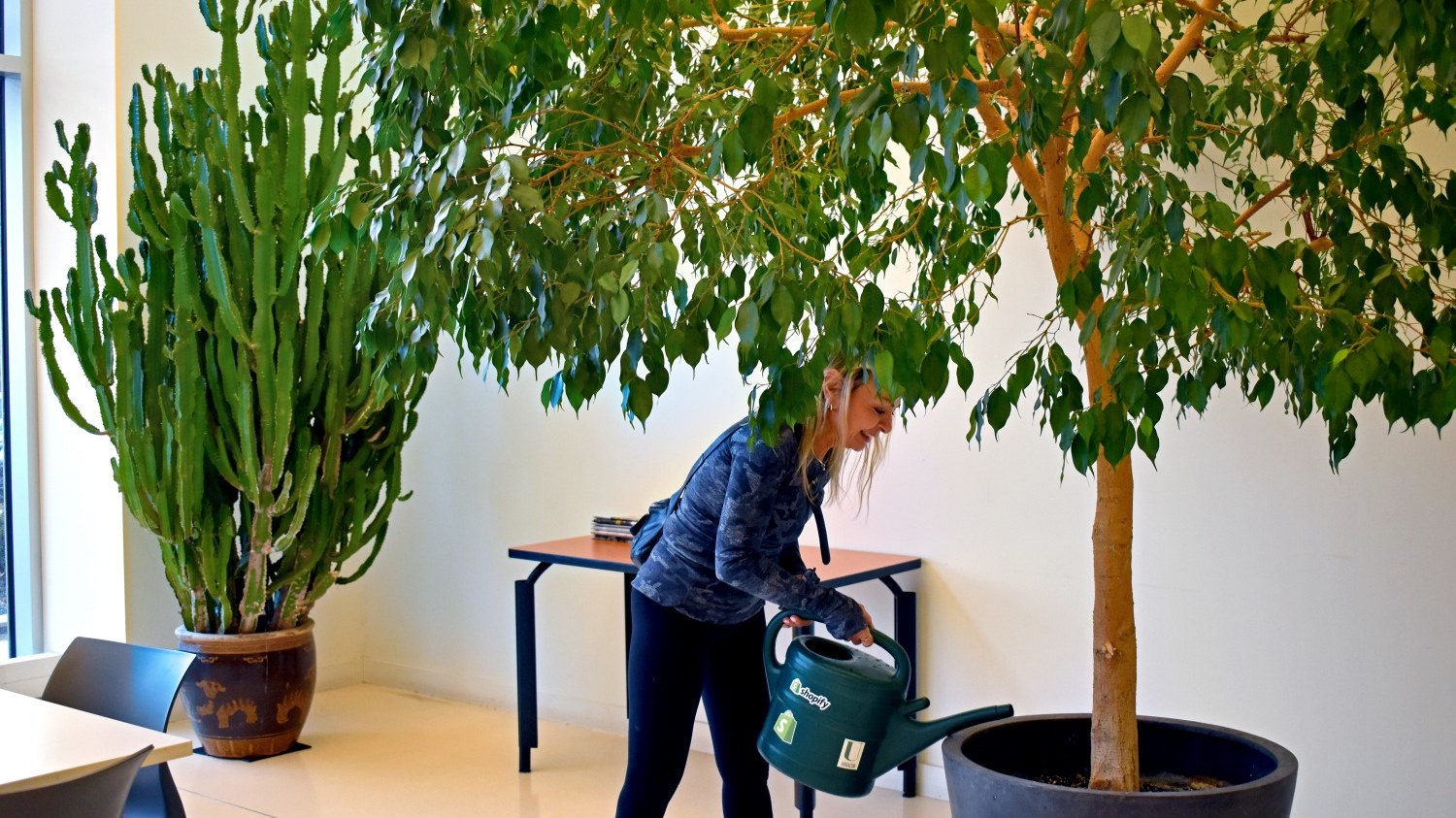
Someone always notices on a Monday. The big plant by the boardroom door has gone limp, a few lower leaves have yellowed, and the soil is dark and heavy to the touch.
The first instinct is to water it. That instinct is usually what killed it.
Offices rarely lose plants to neglect. They lose them to kindness spread across too many people — three colleagues topping up the same pot in one week, then nobody for ten days.
What is root rot, and why do office plants get it?
Root rot is what happens when roots sit in soggy soil long enough to suffocate. Roots need oxygen, and waterlogged soil has almost none left in it. Once roots begin to die, fungi move into the damaged tissue and the decline speeds up.
The office part matters. Low light lowers a plant's water use, so the same schedule that worked beside a window will drown the same plant in a windowless boardroom.
A saucer left full is the other quiet culprit. The root ball wicks that water straight back up and never gets the chance to dry out.
Is it overwatering or underwatering? They look the same
A wilting plant is the most misread signal in any office. Overwatered and underwatered plants both droop, because in both cases the roots have stopped delivering water — one from damage, one from drought.
So ignore the leaves and check the soil. Push a finger in to the second knuckle, or lift the pot and feel the weight.
Signs of overwatering:
- Soil that stays dark, cold and damp several centimetres down
- Lower leaves yellowing and dropping while still soft
- A sour, swampy smell at the surface
- Water standing in the saucer or the cover pot
- Fungus gnats drifting around the nearest desk
If the soil is instead dry, dusty and pulling away from the sides of the pot, you have the opposite problem, and a thorough watering fixes it.
How to fix root rot in an office plant
Root rot treatment is surgical, not gradual. Simply watering less does not undo damage that has already been done.
- Slide the plant out of its pot and clear the loose soil away from the root ball.
- Read the roots: healthy ones are firm and pale, rotted ones are brown or black, mushy, and come apart between your fingers.
- Cut away every soft root with clean secateurs, wiping the blades with rubbing alcohol between cuts.
- Repot into fresh, open, free-draining medium — never back into the old, sodden soil.
- Drop a pot size if you removed a lot of root, since a large pot holds more water than a small root system can use.
- Water once to settle it, empty the saucer, then leave it alone until the top few centimetres are dry.
Trim some foliage while you are there. Fewer leaves mean less demand on the roots that are left.
When is a plant past saving?
Some are. If the trunk is soft where it meets the soil, or the whole root ball falls apart brown and wet in your hands, that plant is not coming back.
Say so plainly. A collapsing feature plant in reception drags on for weeks while everyone quietly hopes, and replacing it is kinder than watching it.
A smaller plant with a few firm roots left is almost always worth the attempt.
How do you stop it happening again?
The fix is a routine, not a note taped to the pot.
Give watering to one person or one supplier, so nobody tops up on top of someone else. Match the plant to the light the room actually has. Then remove as much guesswork as you can: self-watering planters hold a reservoir the roots draw from at their own rate, and a mineral growing medium like Lechuza PON drains freely instead of holding water around the roots.
Across 40+ years and 500+ spaces, the plants that fail on us are rarely the forgotten ones. They are the over-loved ones.
If your office plants keep going soft and nobody can agree on who waters them, our office plant maintenance service takes that routine off your team entirely.