
The Tuesday after a long weekend is when we find them. A floor plant in a boardroom nobody booked, leaves curled and crisp, in soil that went bone dry sometime on Saturday.
Nobody did anything wrong. The office was simply empty for four days.
Watering is the most common reason an office plant dies, and it rarely fails because one person forgot once. It fails because the routine is inconsistent — three people topping up the same plant in a week, then nobody for ten days.
A self-watering planter removes most of that problem. It's worth knowing exactly what it does, because it gets oversold.
What is a self-watering planter?
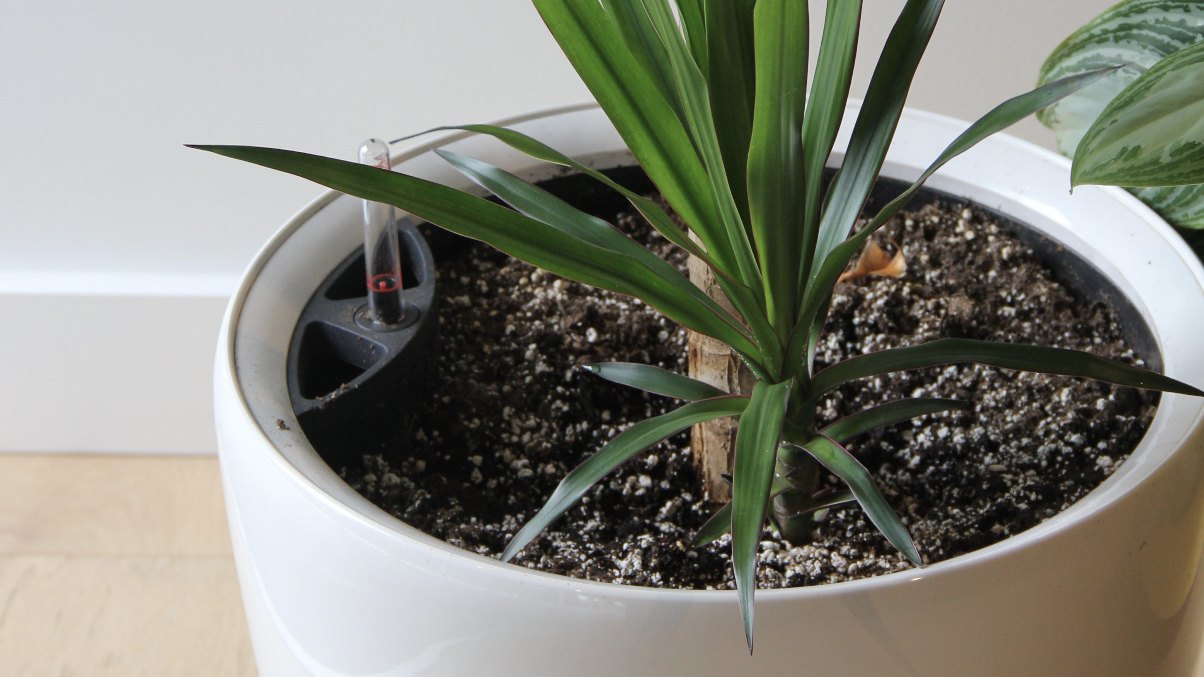
It's a planter with a sealed water reservoir underneath. The roots draw water up at whatever rate the plant actually needs, instead of whatever rate a person guesses.
A gauge on the outside shows the level. You read it walking past — no finger in the soil, no lifting the pot, no debate.
Nothing is automated. No pump, no timer. You still fill it, just far less often, and the plant decides how much it takes.
Why do offices need them more than homes do?
At home, somebody sees the plant every day. An office is a harder place for a living thing:
- Long weekends and the winter holiday shutdown leave plants alone for days, with the heat turned down and the lights off.
- Well-meaning staff water the same plant twice, or top up one that's already wet. Overwatering kills more office plants than drought does.
- Hard-to-reach plants — high shelves, locked boardrooms, behind a reception desk — get skipped for weeks unnoticed.
- HVAC dries rooms unevenly, so two identical plants six metres apart can need very different amounts of water.
A reservoir absorbs all of that. The plant carries itself between visits, and inconsistent hands do much less damage.
What a self-watering planter won't fix
A reservoir solves water. It does nothing about:
- Light. A plant in a dark corner still declines — just more slowly.
- Pests. Scale and spider mites need someone looking for them.
- Seasonal change. Plants drink far less through a Toronto winter, so a reservoir filled on a summer rhythm sits wet too long.
- Pot size. A root-bound plant is still root-bound.
- The wrong plant in the wrong spot. No planter fixes that.
One more thing people miss: a plant moved straight from soil into a reservoir system needs a transition. Water it from the top until the roots grow down far enough to reach the reservoir.
Where they work best — and where they don't
They earn their place with floor plants and large specimens in lobbies, boardrooms, corridors and private offices — anything big, heavy, or awkward to get to.
They're a poor match for succulents and cacti, which want to dry out completely, and unnecessary for a desk plant someone enjoys looking after.
What to look for when you buy one
- A gauge you can read standing up. If you have to crouch, nobody will check it.
- A real separator system, not a pot sitting in a saucer of water. Roots left in standing water rot.
- A drainage plug if the planter will ever sit outdoors on a patio or terrace.
- A substrate built for it. LECHUZA-PON is a mineral substrate that replaces soil — lighter, cleaner to handle, slow to compact, and washable and reusable.
- A size matched to the plant, not to the corner you want to fill.
Our sister company, Casa Verde Distribution, is the official LECHUZA distribution partner in Canada and supplies these planters and PON substrate wholesale.
The honest summary
A self-watering planter is not a substitute for knowing what your plants need. It's a buffer: it makes the gaps survivable and takes the guesswork out of the job people get wrong most often.
Pair it with someone checking light, pests and pot size on a regular visit, and plants stop being a recurring problem. That's the combination we've used across 500+ spaces in 40+ years.
If your office plants keep dying between long weekends, our office plant maintenance service in Toronto is the place to start.
More on keeping office plants alive