
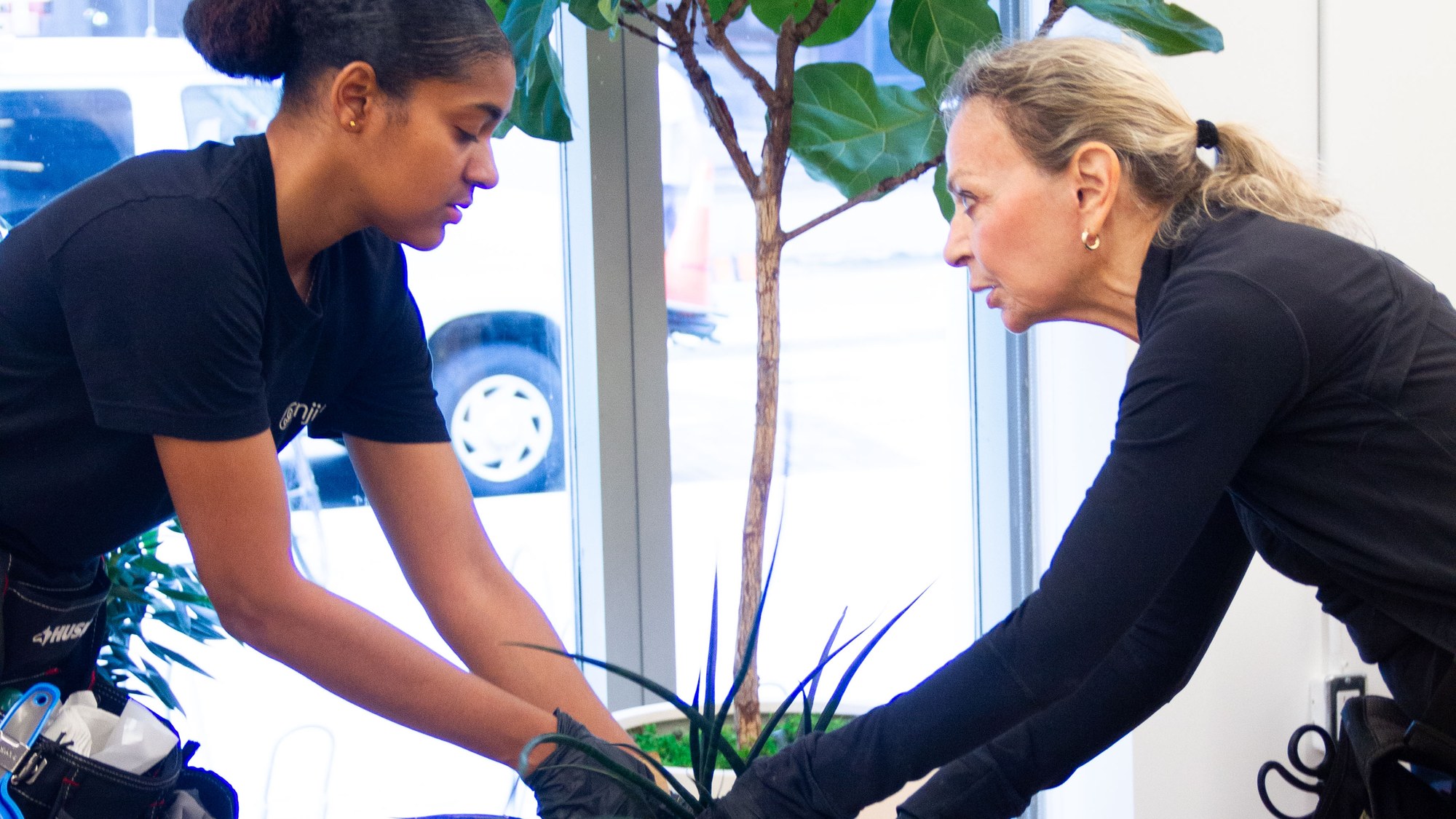
One of our technicians lifted a dracaena out of its planter in a Downtown Toronto boardroom last month. The root ball came out in a single solid piece — a dense white mat in the exact shape of the pot, with barely any growing medium left between the roots.
Nobody had done anything wrong. The plant had filled the container it arrived in.
Repotting is the one moment when almost everything about how that plant lives is on the table: the container, the growing medium, the spot on the floor. The plant is already out. Changing three things costs no more effort than changing one.
Most offices waste it. The plant goes into a slightly larger pot with the same exhausted soil, back into the same dim corner, and nothing improves.
When should you repot a plant?
The plant tells you, not the calendar. A tired-looking plant usually needs light, water or pest attention long before it needs a new pot, and repotting a stressed plant adds stress rather than removing it.
The signals worth acting on are physical ones:
- Roots circling the inside of the pot, visible as a tight spiral the moment you lift the plant out.
- Roots escaping through the drainage holes or surfacing across the top of the medium.
- It dries out far faster than it used to — there is more root than medium left to hold water.
- Growth has stalled while light, watering and feeding have stayed the same.
One signal alone can mean something else. Two or three together mean the pot is full.
What does root bound actually mean?
Root bound is the point where roots have filled the container and begun to circle it, simply because there is nowhere else to go. The plant is no longer growing into its medium; it is growing into itself.
Left alone, those outer roots thicken and compress the ones inside them — the plant tightens its own supply line.
This is why the outer layer of a root-bound ball gets teased apart before the plant goes into its new home. Roots left uninterrupted often keep circling in the same shape — in a bigger pot that changed nothing.
Why is a bigger pot usually the wrong answer?
Because a pot is not storage, it is a water system. Medium that no root has reached stays saturated long after the plant has taken what it needs, and roots sitting in cold, airless wet is how rot starts.
Stepping up one pot size at a time is standard practice for exactly this reason. The root ball meets a manageable ring of fresh medium, colonizes it, and the whole pot dries at a consistent rate.
Going up three sizes to "save a step later" usually buys a rot problem.
What else should you change while the plant is out?
The medium is the change offices most often skip. Peat-based mixes break down and compact over time, so the pot holds less air and more water each year — a repot is a medium change as much as a container change. It's worth reading what LECHUZA PON is before defaulting back to soil.
While you're choosing a container, choose the kind of container. A plant that dried out over every long weekend may be better served by a self-watering planter than by a matching ceramic pot.
And reconsider the position. If the plant struggled in that corner for two years, a fresh root ball will not change the light.
Who should be repotting indoor plants at work?
In a maintained program, this isn't the office manager's job. Repotting indoor plants at scale means handling weight, assessing roots honestly, and deciding what gets a new pot versus what should be replaced — without leaving medium across a client's floor.
It's also judgment work: knowing which plants to leave alone this season matters as much as knowing which to move up. That's what 40+ years and 500+ spaces serviced buys.
If you're not sure which of your plants have outgrown their pots, that's what we assess on a regular visit — our office plant maintenance service is where to start.