
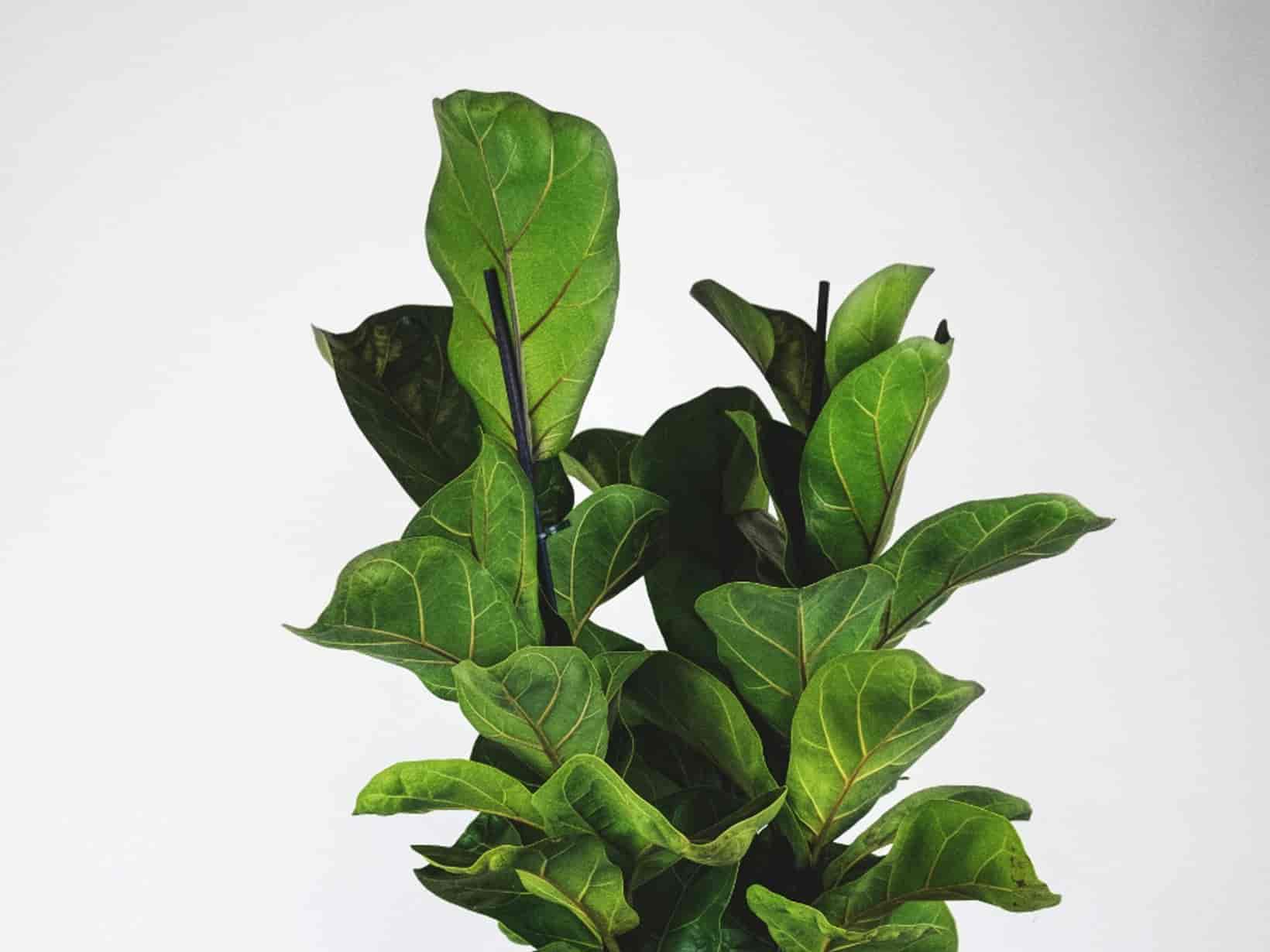
Ficus Lyrata
Ficus lyrata — The High-Maintenance Design Icon
Light
Bright light only — within roughly a metre of a window, or under supplemental full-spectrum LED further back. Avoid direct sun, which burns the large leaves.
Water
Finicky about consistency. Water on a fixed schedule rather than reactively — underwatering causes brown spots and leaf drop, overwatering causes root rot.
Humidity
Moderate to high. Dry heating during Toronto winters can show up as leaf-edge browning.
Temperature
18–24°C (65–75°F). Sensitive to drafts and sudden temperature swings — keep it away from exterior doors and vents.
Difficulty
Advanced
Sizes
Column (150–210cm) — single unbranched trunk, narrow footprint for tight spaces · Bush (120–180cm) — multiple stems from the base, fuller and shorter than the tree form · Tree (210–365cm) — single trunk with a branching canopy, the classic statement piece
The fiddle leaf fig, botanically Ficus lyrata, is easy to pick out from other ficus: it grows very large, stiff, violin-shaped leaves — 20–38cm (8–15 inches) long — with heavy pale veining across a glossy dark green surface, a much bolder leaf than the smaller, softer foliage of the weeping fig or rubber plant. In ideal conditions it grows into a genuine small tree, reaching 3.6 metres (12+ feet) with age.
In the Office
A fiddle leaf fig only earns its place in an office that can give it real light — within about a metre of a window, or under supplemental full-spectrum LED for anything set back further than a metre from a south-facing window. It's a poor fit for windowless boardrooms or interior corners; in low-light buildings we'd rather place it as a seasonal rental than commit to a permanent specimen that will struggle. Where the light is right it delivers genuine tree-scale presence in a lobby or reception, but watering has to stay consistent — this plant punishes both under- and overwatering.
Why Choose This Plant
Benefits for Your Office
- Genuine tree-scale presence — a mature specimen reads as real architecture in a lobby or boardroom, not just a plant in the corner
- Three growth forms — tree, column, or bush — give options for a broad feature corner or a narrow footprint in a tight hallway
- Responds well to spring pruning and notching, so the canopy can be shaped and encouraged to branch without losing height
- Has become a recognisable symbol of design-conscious workplaces, which makes it an easy plant for clients to ask for by name
Where to Place It
Office Placement Ideas
- 1
Lobbies and reception areas with a south- or west-facing window — the tree form's branching canopy makes the strongest first impression, provided it stays within about a metre of the glass
- 2
Narrow corridors or tight corners near a bright window — the column form's single unbranched trunk keeps a small footprint while still reading as a specimen plant
- 3
Boardrooms or open-plan floors set back from windows — only with supplemental full-spectrum LED grow lighting installed; without it, this is not a plant for a windowless or low-light room
How to Care for It
Care Tips for Office Environments
- Water on a fixed schedule, not by guesswork — inconsistent watering is the single biggest cause of leaf drop and brown spots on this plant
- If brown spots are spreading rather than staying put, that points to bacterial infection rather than a watering problem — flag it for a closer look
- Check the stems and leaf joints regularly for mealybugs, scale, and spider mites, its most common pest problems
- Prune in spring to keep the canopy full, cutting just above a leaf node to encourage new branching without losing height
Want Ficus Lyrata in your office?
Our team will recommend the right variety and size for your space, deliver and install it, and keep it thriving with ongoing care.