
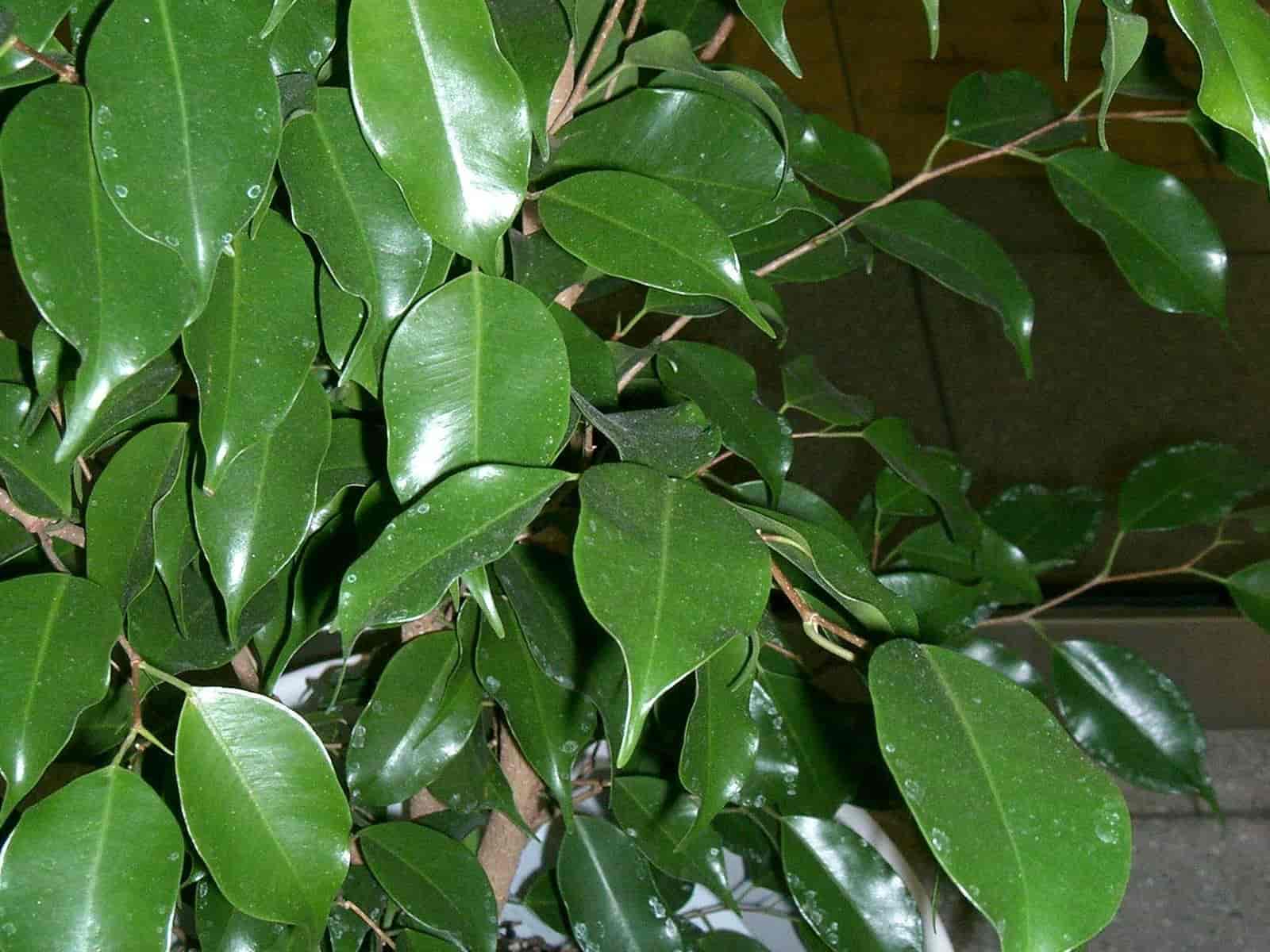
Ficus Benjamina
Ficus benjamina — The Beautiful But Temperamental Office Tree
Photo: source · CC BY-SA 3.0
Light
Bright indirect light, within a few feet of a window; tolerates some morning sun. Needs supplemental full-spectrum LED on a timer to survive in a low-light interior.
Water
Water consistently on a steady schedule year-round — this species is notorious for dropping leaves when watering is erratic, whether too dry or too wet.
Humidity
Moderate. Not especially humidity-sensitive, but avoid placing it beside a dry heating vent.
Temperature
18–27°C (65–80°F). Sensitive to drafts and sudden temperature changes — keep away from exterior doors and heating vents, and maintain stable conditions during any nearby renovation work.
Difficulty
Advanced
Sizes
Floor (90–150cm) · Statement Tree (150–250cm) · Large Specimen (250cm+)
Ficus benjamina, commonly called the weeping fig, is a woody-trunked tree with a dense, drooping canopy of small, pointed, glossy leaves on fine, arching branches. In commercial spaces it is most often sold as a braided or standard single- or multi-trunk tree, which sets it apart at a glance from the broad leaves of the fiddle-leaf fig or rubber plant. It's one of the most recognisable tree-form plants in office lobbies, thanks to that fine, weeping silhouette.
In the Office
In a commercial space, ficus benjamina works best in a bright lobby, atrium, or open floor area within a few feet of a window, where it can tolerate some morning sun. It will not hold up in a low-light interior without supplemental full-spectrum LED grow lighting on a timer, so it isn't a fit for an interior boardroom or a desk away from glass. The tradeoff for its tree-scale presence is a reputation for dropping leaves under stress — inconsistent watering, a move, or a sudden change in light or temperature can all trigger it. If a renovation is happening nearby, loop us in early so we can help protect it from dust and temperature swings.
Why Choose This Plant
Benefits for Your Office
- Genuine tree-scale presence — a woody trunk with a fine, drooping canopy that reads differently from broad-leafed ficus varieties like the rubber plant or fiddle-leaf fig
- Responds well to pruning, so height and canopy shape can be actively managed as the tree grows in a commercial space
- Sold as a single or multi-trunk standard tree, or braided form, giving design flexibility for different lobbies and reception areas
- The Ficus Midnight cultivar has darker leaves and better tolerance of lower-light corners than the standard variety
Where to Place It
Office Placement Ideas
- 1
Bright lobbies and atriums within a few feet of glass — this is where a weeping fig's tree-scale canopy has the most impact and the light it needs to hold its leaves
- 2
Reception areas with morning sun exposure — the fine, weeping form works well as a focal point behind a reception desk when there's a nearby window
- 3
Skip interior boardrooms and desks without a window — without supplemental full-spectrum LED lighting on a timer, this ficus will not hold up away from natural light
How to Care for It
Care Tips for Office Environments
- Expect some leaf drop after any move, rotation, or change in light — it's this plant's normal stress response, not a sign it's dying. Give it a stable spot and consistent watering, and new leaves will fill back in
- Water on a steady schedule rather than reacting to how the soil looks — irregular watering, wet or dry, is the other common trigger for leaf drop
- Prune in spring and thin the canopy for airflow — it tolerates pruning well, but wear gloves, since the sap can irritate skin, and protect floors and furniture underneath, since it drips
- Check stems and leaf axils regularly for scale, mealybugs, spider mites, and whitefly, and if a renovation is happening nearby, loop us in early so we can protect it from dust and keep temperatures stable
Want Ficus Benjamina in your office?
Our team will recommend the right variety and size for your space, deliver and install it, and keep it thriving with ongoing care.