
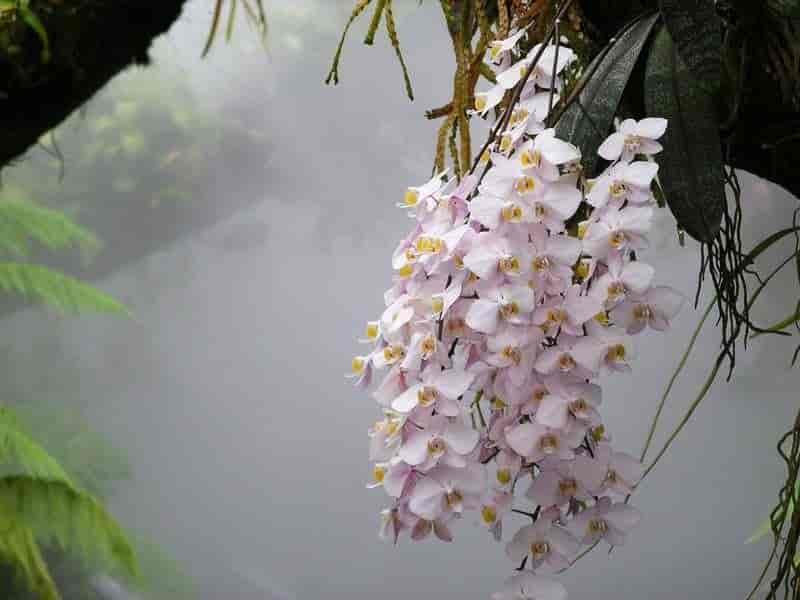
Phalaenopsis
Phalaenopsis — The Moth Orchid Showpiece
Photo: source · CC BY-SA 3.0
Light
Medium to bright indirect — east or north-facing windows are ideal. Direct sun scorches leaves; too little light prevents re-blooming.
Water
Ice cube method is unreliable — use room-temperature water instead. Roots should be silvery-green when dry, bright green when watered.
Humidity
Prefers moderate to high humidity. Leaf edges brown in dry winter heating.
Temperature
18–27°C (65–80°F). Keep away from cold drafts and heating vents.
Difficulty
Moderate
Sizes
Tabletop · Mid-floor · Floor specimen
The Phalaenopsis, or moth orchid, is an epiphytic plant grown in bark-based orchid media rather than regular potting soil. Its thick aerial roots are a normal, healthy part of the plant -- not something to trim or bury -- and in the right conditions it produces long-lasting blooms in white, pink, purple, or yellow.
In the Office
It needs medium to bright indirect light -- an east- or north-facing window is ideal -- since direct sun scorches the leaves and too little light stops it re-blooming. In most commercial installations, once the blooms drop, the plant is swapped out rather than nursed toward a second flowering, worth knowing when budgeting for ongoing colour in a space.
Why Choose This Plant
Benefits for Your Office
- Long-lasting blooms in white, pink, purple, or yellow add colour that foliage plants can't
- Compact mini varieties are available for tabletop and reception-desk placements
- Thrives near an east- or north-facing window, giving options where direct sun would harm other plants
- Non-toxic to cats and dogs, safe for pet-friendly offices
Where to Place It
Office Placement Ideas
- 1
Reception desks or tabletops near an east- or north-facing window, for bright indirect light without direct sun
- 2
Boardroom tables during a meeting series or event, where the bloom provides a season of colour
- 3
Away from windowless interior rooms -- insufficient light prevents it from re-blooming
How to Care for It
Care Tips for Office Environments
- Water at the base only -- water pooling in the leaf centre causes crown rot
- Cut spent flower spikes above the second or third node from the base to encourage a secondary spike
- Remove dead or yellowed leaves by pulling gently at the base, and trim off dead, papery roots while leaving the plump green or silvery ones alone
- Check leaf undersides and the leaf-stem junction for mealybugs and scale
Want Phalaenopsis in your office?
Our team will recommend the right variety and size for your space, deliver and install it, and keep it thriving with ongoing care.