
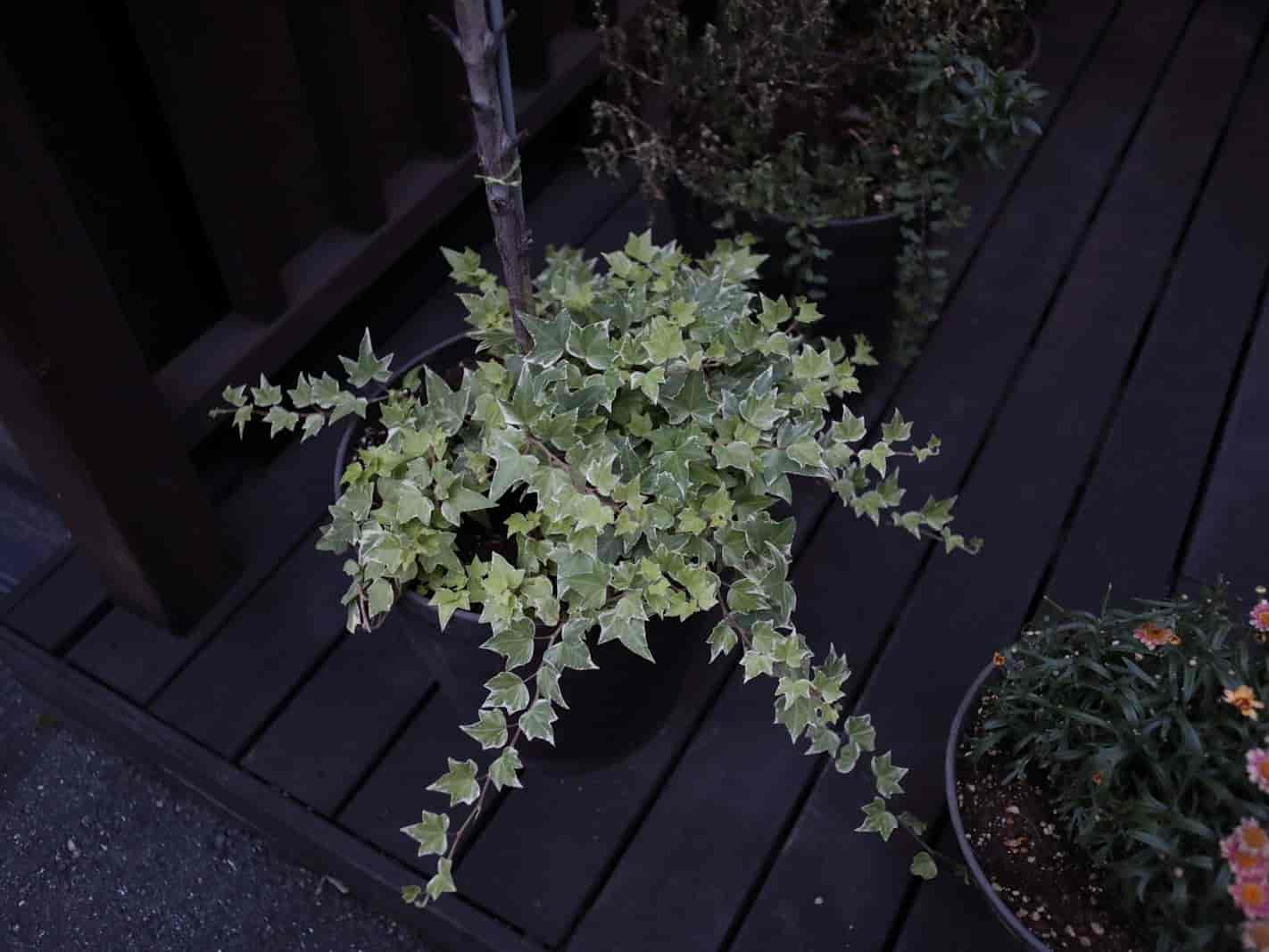
English Ivy
Hedera helix — The Living Wall Standout
Light
Medium — needs a room with a window. Solid green varieties tolerate lower light; variegated types need brighter conditions. Becomes leggy and sparse in very low light.
Water
Temperate, not tropical — prefers cooler, more humid conditions. Overwatering causes root rot and attracts fungus gnats.
Humidity
Prefers moderate to high humidity. Leaf edges brown in dry winter heating.
Temperature
18–27°C (65–80°F). Keep away from cold drafts and heating vents.
Difficulty
Moderate
Sizes
Tabletop · Mid-floor · Floor specimen
English ivy — Hedera helix — is a vigorous trailing vine with lobed, glossy dark green leaves, available in solid green as well as variegated forms edged in white or gold. It's instantly recognizable by its climbing habit — aerial rootlets let it cling to walls, shelving, and trellises as it grows.
In the Office
Ivy suits shelving, living walls, and hanging planters where its trailing or climbing habit can be shown off. It needs a room with a window; solid green varieties tolerate lower light, while variegated types need brighter conditions. It prefers cooler, more humid conditions than a typical dry heated office, and left unpruned it goes leggy and sparse at the base.
Why Choose This Plant
Benefits for Your Office
- Fast, vigorous grower, so hanging baskets and living walls fill in quickly
- Trails or climbs, giving designers a shape most other office plants can't offer
- Comes in variegated varieties like Glacier and Gold Child as well as solid green, for different looks
- Works as groundcover, in hanging baskets, or trained up trellises and shelf planters
Where to Place It
Office Placement Ideas
- 1
Living walls and vertical planters — aerial rootlets let it cling and cover surface quickly, though painted walls need protection
- 2
Shelving and elevated ledges — trailing stems cascade down cleanly in reception areas and open-plan offices
- 3
Cooler corridors and stairwells away from heating vents — ivy prefers cooler, more humid air than a typical open office
How to Care for It
Care Tips for Office Environments
- Trim it back to a leaf node every 6-8 weeks — left alone, it gets leggy and bare near the base
- Watch for aerial rootlets reaching for painted walls and trim or redirect them before they attach
- Check for spider mites, especially November to March — heated office air is when infestations spike
- If a secondary type called cyclamen mites takes hold badly, replacing the plant is often easier than treating it
Want English Ivy in your office?
Our team will recommend the right variety and size for your space, deliver and install it, and keep it thriving with ongoing care.