
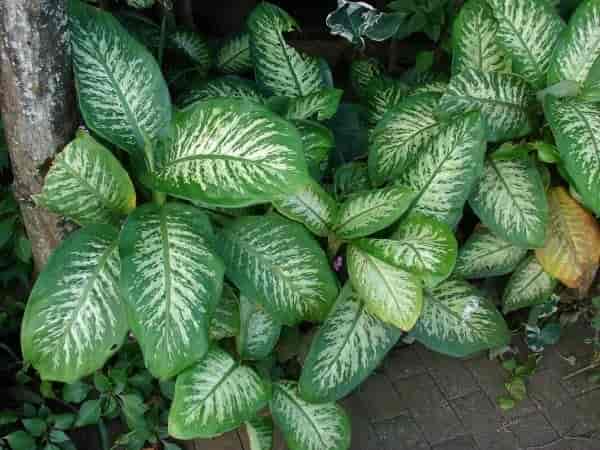
Dieffenbachia
Dieffenbachia — The Striking Plant That Needs Gloves
Photo: source · CC BY-SA 2.5
Light
Low to medium light; variegated cultivars need brighter light to keep patterning. Direct sun bleaches the decorative leaf markings.
Water
High-moisture plant — needs more water than Dracaena or Sansevieria. Reacts quickly to drought with wilting and lower leaf drop.
Humidity
Prefers moderate to high humidity. Leaf edges brown in dry winter heating.
Temperature
18–27°C (65–80°F). Keep away from cold drafts and heating vents.
Difficulty
Moderate
Sizes
Tabletop (under 3 ft) · Mid-floor (around 4 ft) · Floor specimen (5 ft+)
Dumb cane, or Dieffenbachia, is an upright, cane-forming plant with large, patterned leaves growing directly off a thick, fleshy stem. As it matures, lower leaves naturally yellow and drop, exposing bare cane at the base — floor specimens typically reach three to five feet.
In the Office
This plant needs more water than most office staples and reacts quickly to drought with wilting, so it isn't a fit for spaces with inconsistent watering. Its sap is highly toxic, causing intense burning and swelling on contact, so it needs a spot away from anywhere children or pets have access, and any pruning must be done with gloves. In low to medium light it holds its patterning fine, though variegated cultivars want brighter conditions to keep their markings crisp.
Why Choose This Plant
Benefits for Your Office
- Bold, patterned foliage on a thick, sculptural cane gives real presence without needing bright light
- Tolerates low to medium light, which opens up placement options beyond a sunny window
- Grows into a genuine floor specimen, reaching three to five feet without needing a large footprint
- Can be cut back hard and re-sprouts from the cane, so an overgrown plant can be reshaped rather than replaced
Where to Place It
Office Placement Ideas
- 1
Interior offices or corridors with low to medium light — it holds up where brighter-light plants would struggle
- 2
Away from areas with regular child or pet access — the sap is highly toxic on contact
- 3
Floor corners that need real height — mature specimens reach three to five feet on a single sculptural cane
How to Care for It
Care Tips for Office Environments
- Cut leggy canes above a node; it can be cut back hard and will re-sprout
- Always wear gloves when pruning — the sap is a serious skin irritant, and wash hands immediately if it makes contact
- Check leaf axils, where the leaf meets the stem, for mealybugs at every visit
- Don't let the soil dry out completely in winter, and group plants together to help hold humidity
Want Dieffenbachia in your office?
Our team will recommend the right variety and size for your space, deliver and install it, and keep it thriving with ongoing care.