
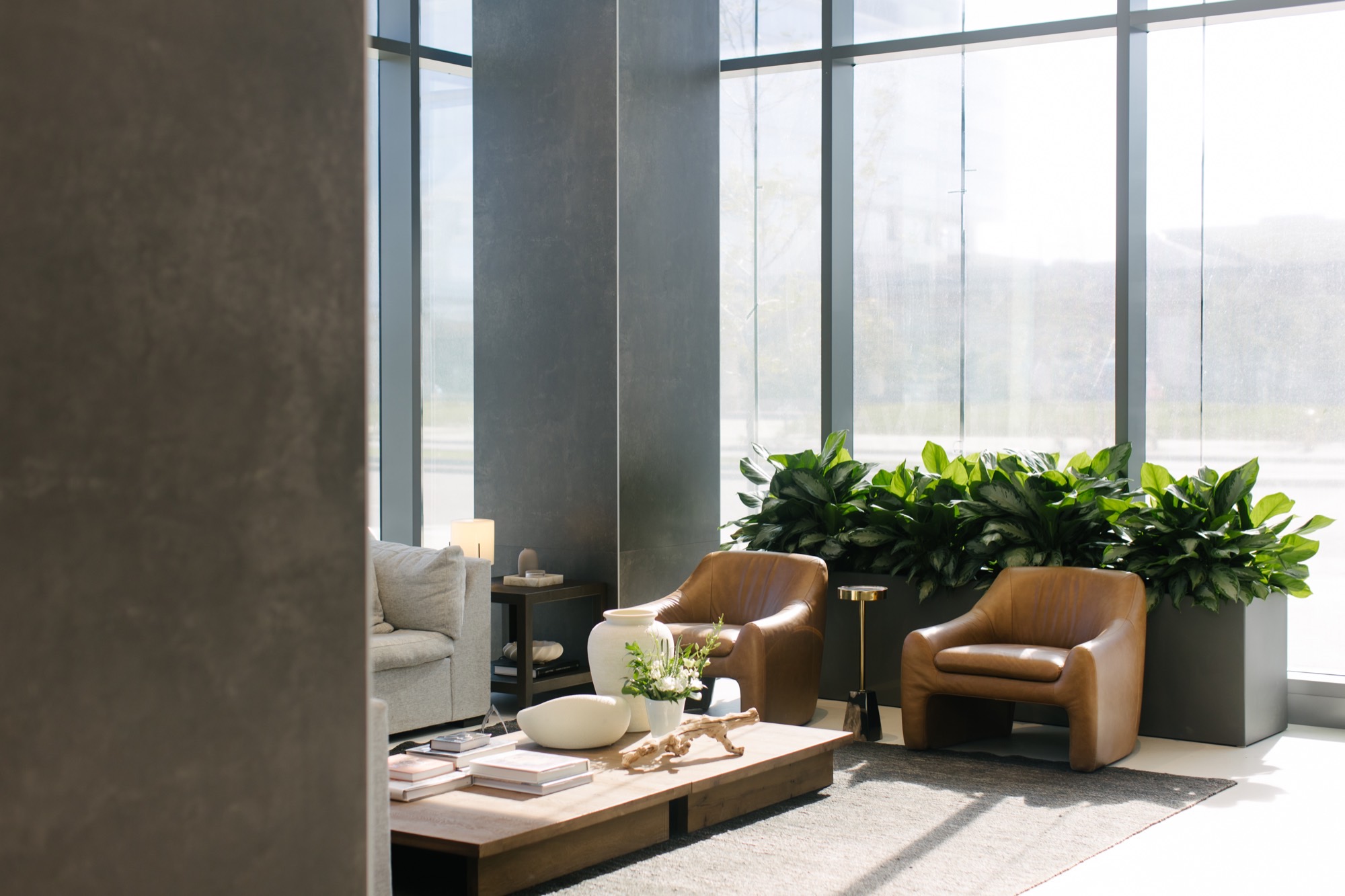
Picture a reception desk with a big window at one end and a row of ceiling tubes overhead. Someone buys a pothos for it. It looks fine for a month, and then the lower leaves start to yellow. Nobody measured the light. The plant was chosen by eye, and the eye is a poor meter.
Why "bright" is not a measurement
Most offices get described in words like bright, medium and low. Those words feel clear, but they mean different things to different people. A corner that feels bright from a desk chair can still be dim for a plant that needs a steady supply of light.
A light meter replaces the guess with a number. It is the only way to compare one spot with another, and to compare a spot with what a plant needs.
Lux and foot-candles measure the same thing
Meters report light in one of two units. Foot-candles are the American unit and lux is the international one. Planterra gives the exact conversion: one foot-candle equals 10.76 lux. UF IFAS rounds it to about 10, which is fine for a rough check but not for comparing numbers. Check which unit your meter shows before you read a guide.
UF IFAS says a meter should display foot-candles or lux and be accurate to about one foot-candle. It also says phone light apps should only be used for approximations. UF IFAS adds that offices lit only by fluorescent bulbs often measure 40 foot-candles or less, so a bright-looking office may read much lower than expected.
Why the bands do not agree
The three extension and industry guides we checked use different cut-offs for low, medium and high light. The three guides split the same range this way:
- UF IFAS: low 25 to 100 fc, medium 100 to 500 fc, high 500 to 1,000 fc.
- University of Arizona: low 25 to 75 fc, medium 75 to 150 fc, high 150 to 1,000 fc.
- Planterra: low 50 to 100 fc, medium 100 to 250 fc, high 250 fc and up.
A reading of 200 fc is medium in two of these guides and high in the third. The bands are rough labels, not scientific limits. So match the species to the number you measured, and treat any single label as a starting point. Planterra's low-light list includes common office choices such as pothos, snake plant and ZZ plant, with a 50 to 100 fc range.
How to take a reading
- Use a digital meter that displays foot-candles or lux, and check that it is accurate to about one foot-candle.
- Take readings in winter. Arizona notes that winter sun is lower and days are shorter, so a spot that looks fine in June may fall short by January.
- Leave blinds and window coverings in their normal position. Arizona notes that coverings reduce indoor light, so a reading taken with the blinds open can overstate what the plant gets day to day.
- Note the weather. Planterra notes that cloud cover can significantly affect the natural light indoors.
- Log each spot with the date, time, unit, and window direction.
Read the number against the species
Planterra gives a sense of what commercial spaces look like on a meter. It puts interior commercial spaces at about 50 fc under normal task lighting, and above 150 fc near windows. A desk in the middle of a floor and a desk by the glass can sit in different light bands on the same day.
This is why our walk-throughs start with readings. A green wall or a planting plan should follow the light, not the other way around. If you want us to measure your space and recommend species for those numbers, our office plant design team can walk the floor with you before anything is ordered.
Sources
- UF IFAS, Light for Houseplants: https://gardeningsolutions.ifas.ufl.edu/plants/houseplants/light-for-houseplants/
- University of Arizona Extension, Indoor Plant Selection and Care: https://extension.arizona.edu/publication/indoor-plant-selection-and-care
- Planterra, Lighting Guide for Interior Landscape Design (2019): https://planterra.com/wp-content/uploads/2019/04/PlanterraLightingGuide4.19.pdf. Planterra is a plant and planter supplier, so its guide is written by a vendor.