
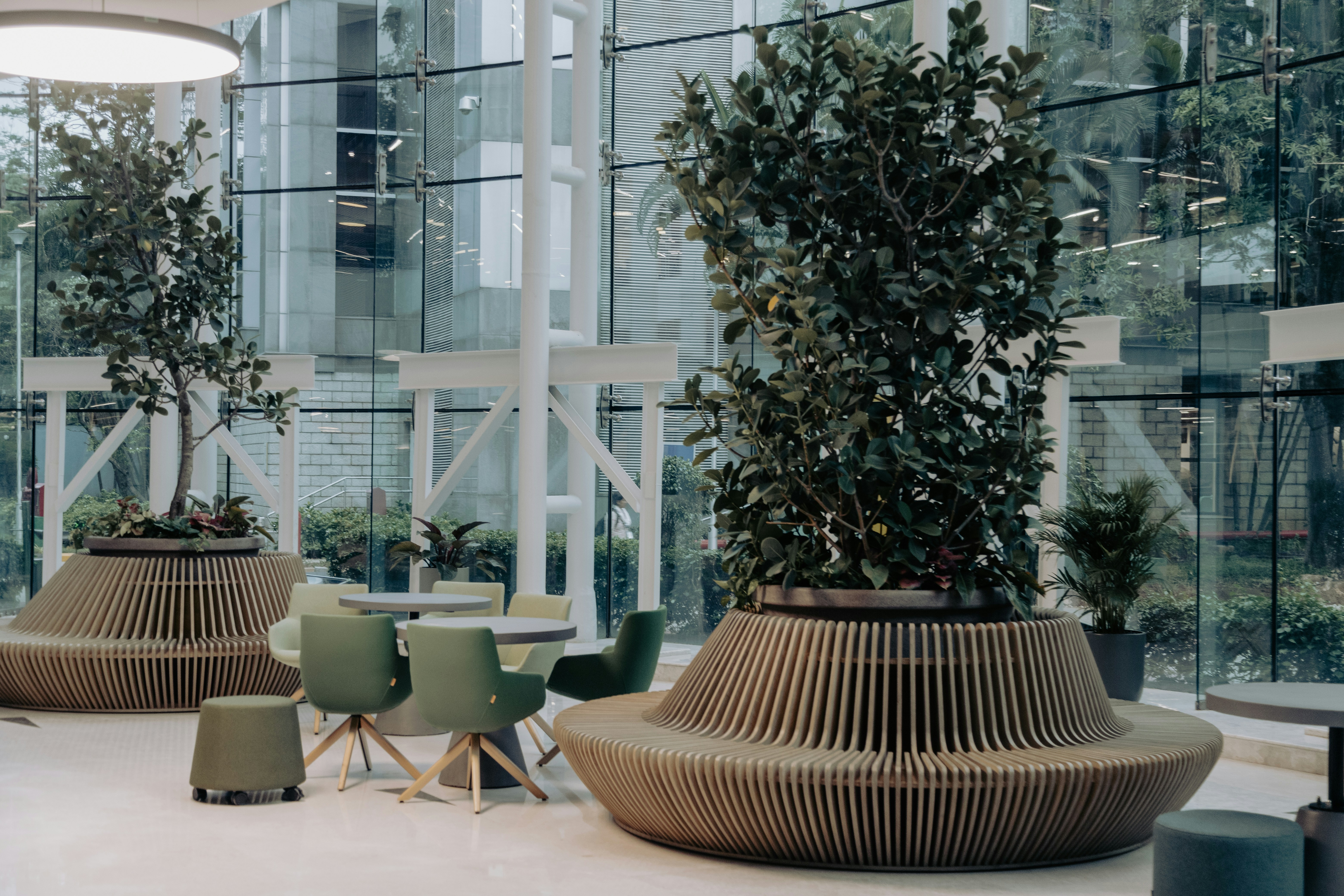
Summer in Toronto brings longer days and more natural light — but also aggressive air conditioning. For office managers and facility coordinators, June through August is quietly the hardest season for workplace plants, even when windows are flooded with sunshine.
Understanding why plants decline in summer can mean the difference between a thriving green office and an embarrassing collection of yellowing leaves.
The Real Summer Villain: Air Conditioning
Most people assume plants love summer. More light, warmer temperatures, faster growth — what's not to like? But in a Toronto office building, summer means the HVAC system runs constantly. That creates three specific problems:
Cold drafts near vents. Plants placed directly under or beside air conditioning vents experience rapid temperature swings that stress their cells. Ficus benjamina, Dracaena, and other sensitive species react by dropping leaves, sometimes dramatically.
Dry air. Air conditioners remove moisture as they cool. Indoor humidity in an air-conditioned Toronto office often drops to 30–40% in summer — lower than many plants prefer, especially tropical species that thrive above 50%.
Inconsistent watering. Summer brings vacation schedules, skeleton crews on Fridays, and reduced foot traffic. Plants that normally get checked twice a week go unwatered for ten days. By August, the damage shows.
Which Plants Suffer Most
Some species handle Toronto summers in climate-controlled offices just fine. Others don't:
- Vulnerable: Ficus benjamina, peace lily (Spathiphyllum), Boston fern, orchids, calathea. These need stable temperatures and consistent humidity.
- Resilient: ZZ plant (Zamioculcas zamiifolia), snake plant (Sansevieria), pothos (Epipremnum aureum), cast iron plant (Aspidistra elatior). These tolerate drought, dry air, and temperature swings.
If your office has high staff turnover in summer or reduced facilities coverage, resilient species are your best insurance.
Five Fixes That Actually Work
1. Move plants away from vents. This single change prevents most cold-draft damage. Plants should be at least 1.5 metres from any ceiling or floor vent. Audit your space at the start of June — the AC that wasn't running in April is now blasting.
2. Group plants together. Clustering plants raises the local humidity through transpiration. A grouping of three or four medium pots can meaningfully improve the microclimate for all of them.
3. Adjust watering schedules before vacation season. If your watering routine drops from twice weekly to once weekly in July, choose drought-tolerant varieties for exposed, sunny spots. Or ask your plant care provider to increase service frequency during summer months.
4. Check for direct sun. In June and July, the sun angle changes. A window that offered soft indirect light in February may now deliver hours of harsh direct sun. Scorched, bleached leaves in summer are often a light problem, not a watering problem.
5. Don't fertilize struggling plants. A common summer mistake: adding fertilizer to a plant that's already stressed. Fertilizing a heat-stressed, root-bound, or drought-stressed plant can burn the roots. Healthy plants in active growth benefit from summer fertilizing; declining plants don't.
When to Call a Professional
If your office plants are looking noticeably worse in June than they did in April — yellowing leaves, dropping foliage, dry soil that repels water — it's usually a sign the plants need professional assessment, not just more water.
A professional plant care partner will audit placement, rotate species to better-suited locations, adjust care frequency, and replace any plants that have declined beyond recovery.
Benji's has provided commercial plant maintenance to Toronto offices for over 40 years. If your workplace plants are struggling this summer, we can help. Contact us for a consultation.
Photo by Bernd 📷 Dittrich on Unsplash