
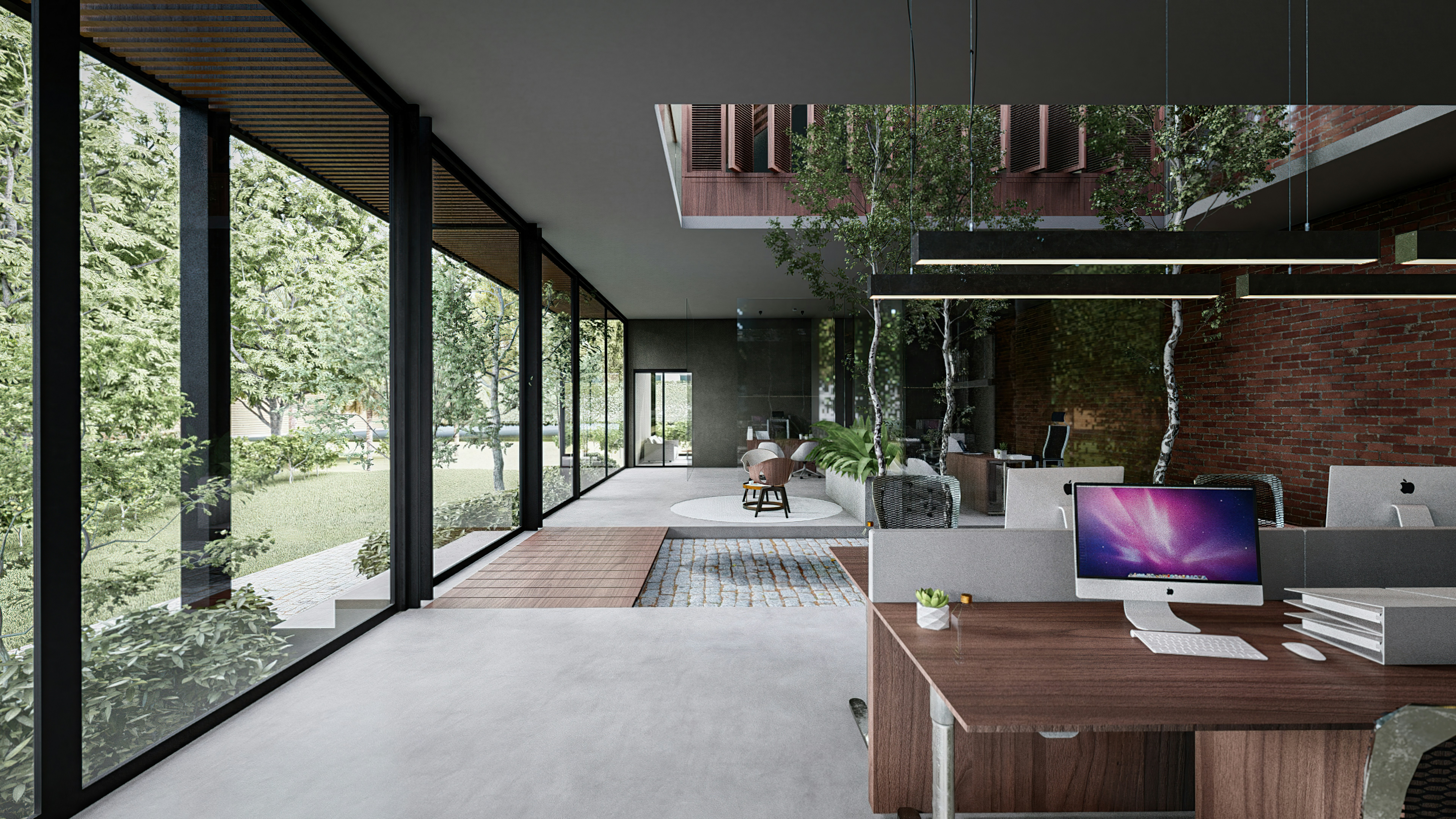
If you're an HR leader or facilities manager at a Toronto company, you already know that getting people back to the office is no longer just a policy question — it's a design question. The physical environment you're asking employees to return to is now in direct competition with the comfort and flexibility of home.
That shift has changed how smart employers are approaching their office budgets. And for many, indoor plants have become one of the more practical levers available.
THE OFFICE ENVIRONMENT IS NOW A COMPETITIVE ADVANTAGE
Return-to-office mandates have pushed workplace experience to the top of the facilities agenda across the GTA. Employers competing for attendance — and for talent — are investing in lobbies, collaborative zones, and sensory environments that make the commute feel worth it.
The question isn't whether to invest in the physical office. It's where to put your dollars for maximum visible impact. That's where biophilic design, and specifically commercial plant programs, have started appearing in more RTO budgets.
Plants are not décor. They are a fast, scalable signal to your team that the office has been thought about — that someone made decisions with their comfort in mind.
WHAT THE RESEARCH SAYS ABOUT PLANTS AND PRODUCTIVITY
There is a substantive body of research connecting biophilic environments to measurable workplace outcomes. Studies conducted across office settings have found meaningful improvements in employee wellbeing, self-reported productivity, and creative output when natural elements — particularly plants — are present in the workspace.
Research published by the University of Exeter found that employees in offices with plants reported higher wellbeing and concentration levels compared to those in lean, plant-free environments. Separate studies on indoor air quality have shown that common office plants can reduce airborne toxins and volatile organic compounds, which correlates with fewer headaches, less fatigue, and lower rates of sick-day absences.
For an HR team tracking engagement and absenteeism, those are not soft benefits. They show up in measurable ways over a quarter or a year.
The practical takeaway: a well-designed plant program is one of the few office investments that improves how a space looks, how it feels, and how it functions — simultaneously.
WHAT "OFFICE PLANTS AS RTO STRATEGY" LOOKS LIKE IN PRACTICE
The placement decisions matter. A few plants pushed into corners do not have the same effect as a thoughtfully installed program covering entrance areas, collaboration zones, meeting rooms, and quiet work areas.
High-traffic, high-visibility zones are where plants do the most strategic work. An entry installation is the first thing an employee sees when they walk in. A green wall behind a collaboration area signals intention. A few well-chosen specimens in a boardroom change the tone of a client meeting.
The other practical reality: who maintains them? This is the question that kills most self-managed plant programs. Plants that are neglected, yellowing, or clearly struggling send the opposite signal — they suggest the office is an afterthought. Maintenance is not optional; it is the part of the program that makes the investment hold.
HOW BENJI'S HANDLES IT END-TO-END IN TORONTO
Benji's has been maintaining commercial plant programs across Toronto for 40 years. Our process is designed specifically for offices that do not want to think about plants once they're installed.
We start with a design consultation — looking at your floor plan, light levels, existing aesthetic, and what you're trying to communicate with the space. From there, we handle installation, sourcing, and placement. After that, our team visits on a regular schedule for watering, feeding, pruning, and replacement of anything that isn't thriving.
Your team doesn't touch a watering can. That's the model.
You can see our recent installations at benjis.com/portfolio, including projects for Adyen, Shopify, TikTok, and WeWork across the GTA.
FREQUENTLY ASKED QUESTIONS
What types of plants work in low-light offices?
Several species perform well without direct sunlight. Sansevieria trifasciata (snake plant), Epipremnum aureum (pothos), Spathiphyllum (peace lily), and Aglaonema (Chinese evergreen) are all reliable choices for typical Toronto office conditions. We assess light levels during our consultation and recommend accordingly.
How long does installation take?
It depends on the number of plants — anywhere from a single day for a smaller office to a few weeks for a larger or multi-floor program. Larger installs are scheduled to minimize disruption to your team.
What's included in ongoing maintenance?
Regular visits covering watering, fertilizing, pest monitoring, pruning, and plant replacement when needed. We track the health of every plant in your program and handle problems before they become visible.
Photo by Don Kaveen on Unsplash
If you're in the early stages of planning your return-to-office upgrades and want to understand what a plant program would look like for your specific space, book a free consultation with our team at benjis.com/contact. We work across Toronto and the GTA, and there's no obligation — just a practical conversation about what's possible.