
If you're building a workplace improvement proposal, you've probably asked this question: Is there real evidence behind office plants, or does it just look nice?
The short answer is yes — there's evidence. And for Toronto HR teams navigating hybrid RTO mandates and Q3 budget season, it's worth understanding what the research actually says.
What the Research Says
Three studies come up consistently in workplace biophilia research:
Washington State University found that employees working in plant-filled spaces scored 12% higher on productivity tasks and reported significantly lower blood pressure than those in plant-free rooms.
The University of Exeter studied multiple offices and found that enriching a workspace with plants improved employee wellbeing by 47%, creativity by 45%, and productivity by 38%.
The Human Spaces Report, which surveyed 7,600 workers globally, found that people working in environments with natural elements reported 15% higher wellbeing scores and were 6% more productive — yet only 47% of respondents had any natural elements in their workspace.
These aren't fringe findings. The effect is real enough to act on.
Why This Matters More Right Now
Toronto companies investing in RTO are facing a specific challenge: the in-office experience has to be compelling enough to make the commute worthwhile. Plants are part of that equation.
Employees who feel their employer invests in their environment report higher engagement scores and lower voluntary turnover. In a competitive Toronto talent market, visible workplace investment matters — and a well-maintained plant program is one of the most cost-effective ways to signal it.
The Three Things Plants Actually Change
The research points to three distinct mechanisms:
Cognitive restoration. Attention Restoration Theory holds that exposure to natural elements replenishes the focused attention required for sustained desk work. Short exposure cycles in plant-enriched spaces measurably reduce mental fatigue.
Stress reduction. Cortisol levels and self-reported stress are consistently lower in biophilic environments. For open-plan offices with noise and visual distraction, greenery provides a physiological buffer — not just an aesthetic one.
Social signalling. Biophilic spaces encourage longer, more comfortable informal interaction. For hybrid teams, shared office time increasingly happens in casual collaboration zones. A well-planted breakout area raises the quality of that in-person time.
What This Looks Like in a Real Toronto Office
A 30-person floor with moderate light and standard HVAC can typically support 15–25 plant placements — a mix of floor-height architectural species near meeting rooms and smaller planters at desk perimeters.
The setup process starts with a complimentary site visit. Benji's assesses light levels, traffic patterns, and HVAC proximity before proposing a species mix. Installation takes anywhere from a day to a few weeks, depending on the number of plants. Monthly maintenance visits handle watering, rotation, and replacement — your team never has to think about it.
Building the Business Case Internally
The comparison HR teams find most persuasive: a standard maintenance plan for a 30-person Toronto office typically costs less than a single lost-productivity day per month. The breakeven is fast, and the ongoing expense is predictable and budgetable.
If your proposal needs framing, see what office plant maintenance costs in Toronto. If you're evaluating whether to own or lease the plants, the lease vs. buy comparison covers that decision directly.
What to Look for in a Vendor
Not all office plant services are equal. Four criteria worth evaluating:
- Replacement policy — declining plants should be swapped without a separate work order
- Maintenance frequency — monthly visits are standard; bi-monthly is often too infrequent for busy spaces
- Design quality — species selection and placement matter; wrong-sized plants undercut the effect
- Local presence — a Toronto-based provider knows local buildings and how Toronto winters and HVAC affect plants
Choosing the right office plant maintenance company has a full checklist for this evaluation.
Ready to See What This Looks Like for Your Office?
Book a free site visit — we'll walk through your space, assess what's feasible, and put together a design proposal with no obligation.
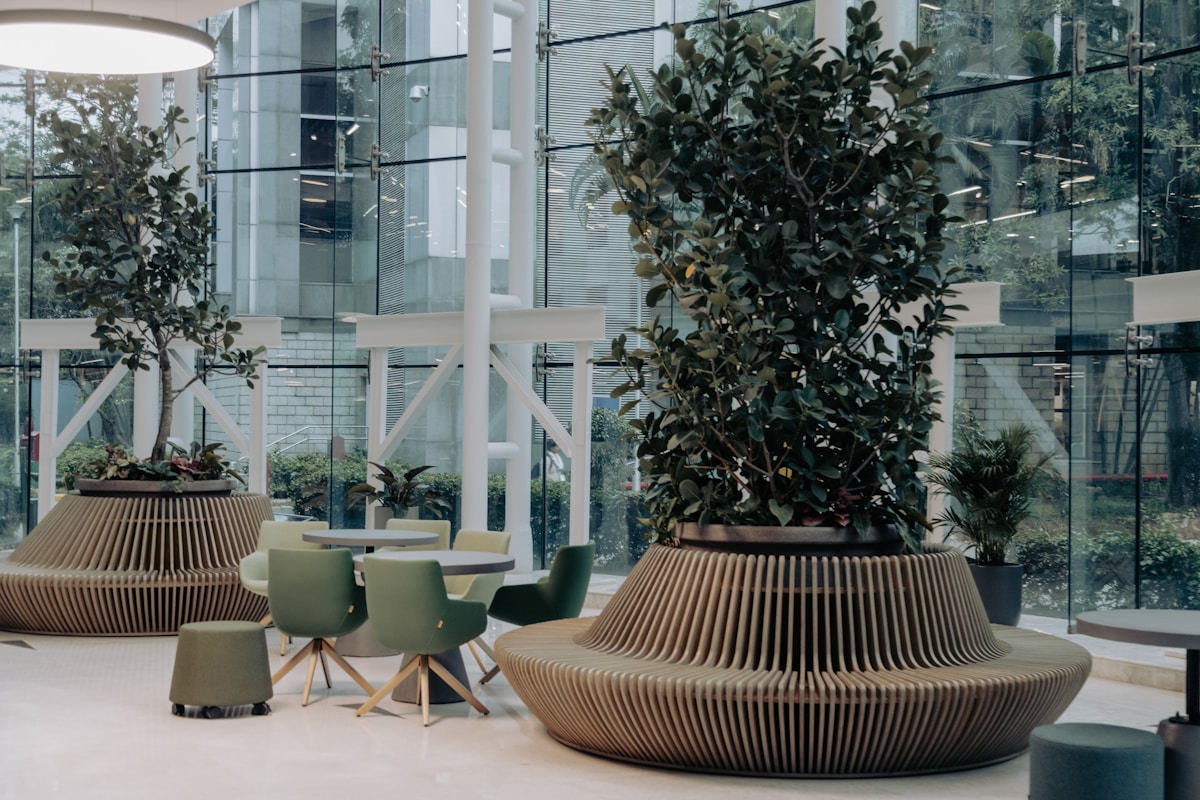
Photo by Bernd 📷 Dittrich on Unsplash