
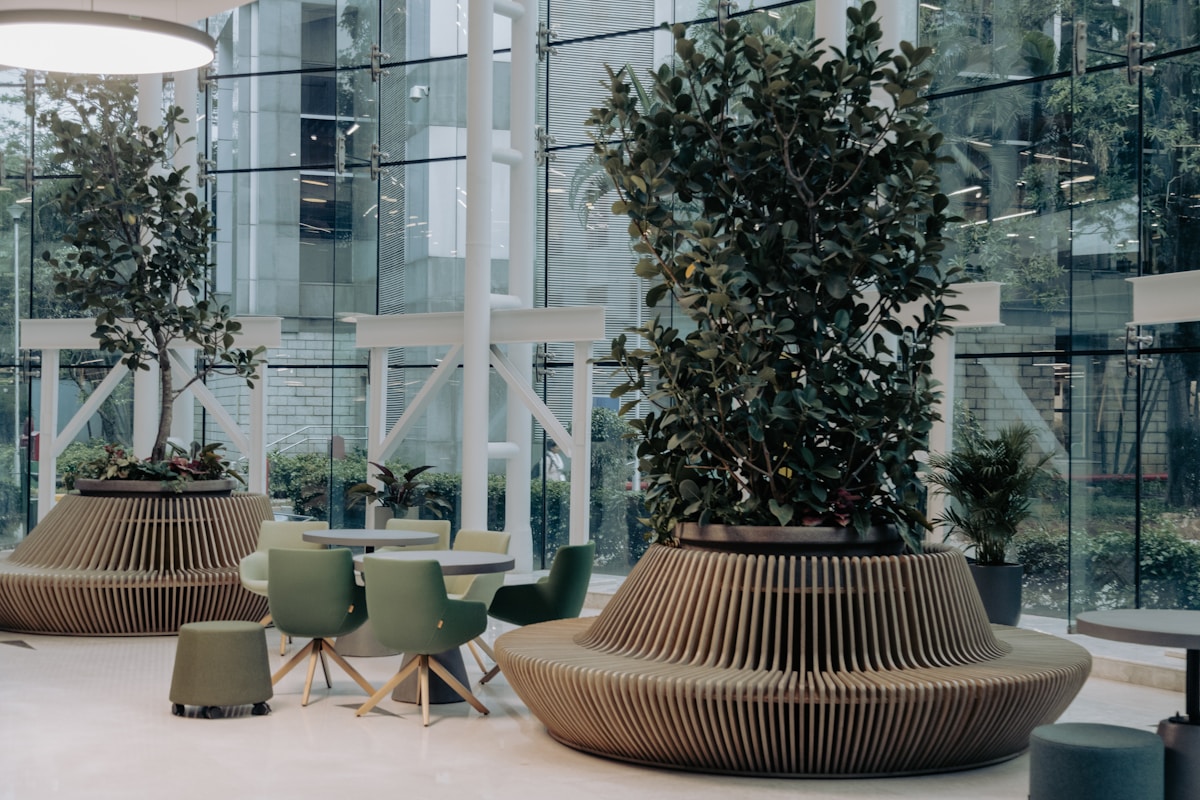
If your Toronto office switched to a hybrid schedule in the past few years, you may have noticed something: the plants look worse than they used to.
It's not your imagination. Hybrid work is one of the most common — and least talked about — reasons office plants decline. The issue isn't the plants themselves. It's the gap between when people are in the office and when the plants actually need attention.
Why Hybrid Schedules Break Plant Care Routines
In a fully in-office environment, someone naturally notices a drooping fern on a Tuesday morning and waters it. With hybrid work, that same person might be at home Tuesday, in for Wednesday meetings, and remote again Thursday. The plant waits.
Most office plants need consistent moisture cycles — not sporadic deep watering when someone remembers. When care is irregular, you get one of two problems:
- Overwatering when multiple people water on the same in-office day trying to compensate
- Underwatering during the stretches when the office sits mostly empty
Both stress the plant, and stressed plants are more vulnerable to pests, root rot, and leaf drop. By the time it's obvious something is wrong, the damage is already done.
The Compounding Effect of Summer
The problem is sharper right now, in June and July, because summer brings its own stressors. Toronto offices blast air conditioning to combat the heat outside, which dries out the air and soil faster than in cooler months. Plants that might tolerate a five-day watering gap in March may need attention every two to three days when the AC is running full tilt.
Combine that with vacation season — offices running at 30 to 40 percent capacity on some days — and plants can go a full week or more without anyone noticing they need water. By mid-July, many Toronto offices are dealing with what we call the "summer drought": a cluster of plants that have slowly but surely declined while everyone was managing the summer schedule chaos.
What Doesn't Work
A common first attempt is to delegate plant care to whoever is in the office that day. This sounds reasonable but rarely holds up. When responsibility is diffuse, it tends to fall through the cracks — especially during busy stretches or when the usual person is on vacation.
A plant care schedule posted in the kitchen also fails for the same reason: it depends on someone choosing to act on it consistently, and hybrid work doesn't produce consistent in-office presence.
Self-watering pots help at the margins, but they need to be monitored and refilled. They also don't address lighting, pest inspection, or seasonal adjustments.
What Actually Works
The offices that keep healthy plants through hybrid schedules — and through summer — are the ones that have removed plant care from their staff's to-do list entirely.
A professional plant maintenance service visits on a fixed schedule, regardless of whether your team is in at full capacity or half. The plants get assessed and watered on the cycle they actually need, not on the cycle that fits around meeting invites.
For hybrid offices specifically, this matters because the professional isn't relying on anyone to have noticed a problem first. They're looking for it. Early pest signs, compacted soil, yellowing leaves — these get caught before they become write-offs.
It also means your office manager or facilities coordinator isn't fielding complaints about dead plants or trying to figure out who was supposed to water the fiddle leaf fig last Thursday.
Ready to take plant care off your team's plate? Get a free plant health check from Benji's →
What to Consider Before Summer Gets Further Along
If your plants are already showing signs of stress — yellowing, leaf drop, dry soil that pulls away from the pot edges — now is the right time to bring in help rather than waiting until fall. Recovering a neglected plant takes longer than maintaining a healthy one.
A good plant service will assess what you have, identify what can be saved, and recommend whether any plants should be replaced with varieties better suited to your specific office environment and care cadence.
Benji's has been maintaining plants in Toronto offices for over 40 years, through every configuration of in-office, remote, and hybrid work. If your plants aren't looking the way they should, we're happy to take a look.
Get in touch with Benji's to discuss your office plant needs.
Photo by Bernd 📷 Dittrich on Unsplash