
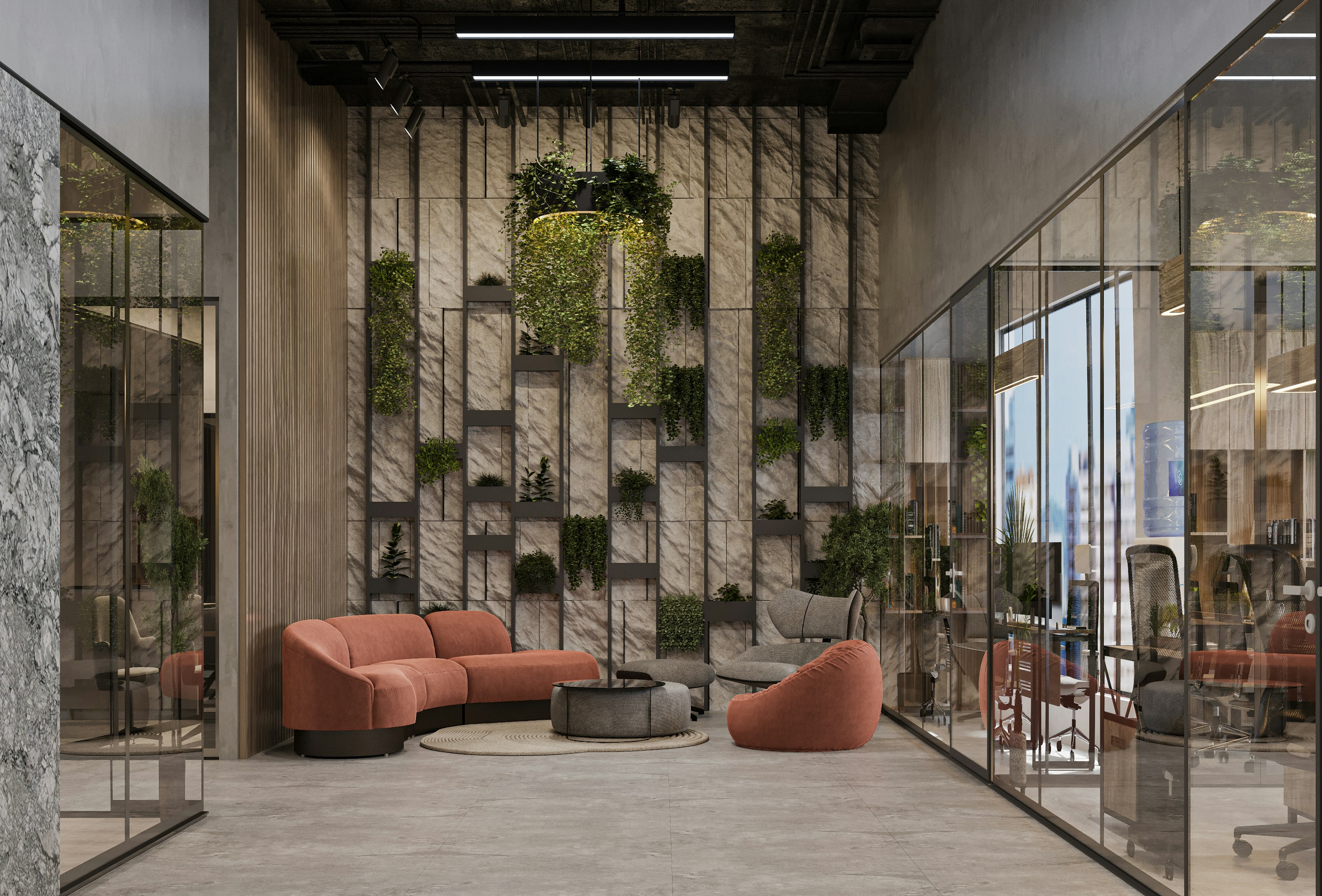
The pressure to make the office worth showing up to has never been more real. With RTO mandates tightening across Toronto's financial, tech, and professional services sectors, facility directors and HR managers are under the gun to improve the physical environment — not just issue the policy. Biophilic design has moved from a conference-room buzzword to a line item in workplace strategy budgets. The question isn't whether it works. The question is where to start and what it actually costs.
Here's a grounded look at what Toronto companies are actually doing, what the research supports, and how to build toward a biophilic workplace without a full renovation budget.
What Biophilic Design Actually Means (And What It Doesn't)
Biophilic design is the practice of integrating natural elements — plants, light, water, natural materials, views of nature — into built environments. The concept is grounded in the biophilia hypothesis: humans evolved in natural settings, and our nervous systems respond positively when elements of those settings are present.
In practice, this doesn't mean installing a living wall or gutting your floor plan. The research supporting biophilic design outcomes — reduced cortisol, improved attention restoration, lower absenteeism — holds up even for modest interventions. A 2015 study from the University of Exeter found that employees in offices with plants reported 15% higher well-being and 6% more productivity than those in lean, undecorated spaces. More recent research from 2024 by the International WELL Building Institute found that natural elements rank among the top three environmental factors employees cite when evaluating whether an office is worth commuting to.
For Toronto offices navigating return-to-office transitions, that's not a soft finding — it's a retention and compliance lever.
What the Leading Toronto Companies Are Prioritizing
Across the mid-to-large employer landscape in Toronto, a few patterns have emerged in how organizations are approaching biophilic upgrades in 2026:
Focal plant installations in high-traffic zones. Rather than scattering small plants across desks, companies are using large-format plants — Bird of Paradise, Fiddle Leaf Fig, large Monstera deliciosa — as visual anchors in lobbies, collaboration spaces, and near elevator banks. These create immediate sensory impact and signal that the environment has been thoughtfully considered.
Green partitions and dividers. As hot-desking and open-plan layouts persist, living partitions — typically built around trailing Pothos, Philodendron, or Heartleaf varieties — are being used to create semi-private zones without drywall. They perform acoustically (foliage absorbs sound) and visually (reducing the "warehouse" feeling of open-plan floors).
Biophilic meeting rooms. Several Toronto firms have designated one or two meeting rooms as "green rooms" — spaces intentionally dense with plant life, better natural light, and sometimes water features. These are booked for creative sessions, difficult conversations, and interviews, based on the premise that the environment affects the quality of the interaction.
Desk-level plants for individual wellness. For employees who have returned to assigned seating, desk-level plants — Sansevieria (snake plant), ZZ plant, or small Pothos in trailing pots — offer personal connection to nature and low-maintenance appeal. These are particularly popular in organizations offering a "welcome back" amenity package for returning staff.
The Business Case: Why This Isn't Just Aesthetics
The cost of employee disengagement and voluntary turnover is well-documented. When Toronto office managers frame biophilic investment in those terms, the numbers become easier to defend internally.
Research from the Human Spaces report (Interface) found that workers in environments with natural elements report a 15% increase in well-being, 6% increase in productivity, and 15% increase in creativity compared to those without. In dollar terms, a mid-sized Toronto employer of 200 people seeing even a 5% reduction in sick days or voluntary churn pays back a significant investment in environmental upgrades quickly.
There's also the recruitment signal. For talent coming from fully remote roles, the visual and sensory quality of a Toronto office is evaluated at the interview stage. An office with intentional plant life — not just a ficus in the corner from 2015 — reads as a place that has thought about employee experience. That's a credible differentiator in a market where many employers are offering similar compensation packages.
For a deeper look at how plants affect employee wellness specifically, see our post on the science behind office plants and productivity.
The Cost Reality: What Biophilic Design Actually Runs
This is where many organizations get stuck — they see ambitious biophilic fit-outs in design publications and assume they can't access the strategy without a major capital project.
The reality is more accessible:
- Entry-level plant installation (10-20 plants, mix of floor and desktop, professionally selected and installed): typically $1,500–$4,000 CAD depending on plant size and planter selection
- Ongoing plant maintenance (watering, fertilizing, repotting, health monitoring, replacements): $150–$500/month depending on plant count and access requirements
- Living wall installation (1-2 panel modular systems): priced per wall — we send a written quote; ongoing maintenance is arranged separately
- Full biophilic design consultation (including light assessment, material recommendations, layout strategy): $1,500–$5,000+ for a comprehensive scope
A note on where Benji's sits in those ranges: we're not the cheap option. We just do a good job.
For most Toronto offices starting from scratch, a phased plant installation is the right first step — it delivers visible, immediate impact, doesn't require construction, and creates a foundation for more ambitious biophilic elements over time.
Where Plants Fit in the Broader Strategy
Plants are not the entirety of biophilic design, but they are the fastest, most reversible, and most cost-effective entry point. Unlike circadian lighting systems, wood cladding, or water feature installations, plants can be introduced, adjusted, and scaled without structural changes.
They also generate the kind of immediate visual feedback that makes the investment legible to leadership, staff, and visitors. A Bird of Paradise in a lobby doesn't require explanation. A ZZ plant on a meeting room credenza changes the feeling of the room in a way that is hard to articulate but easy to register.
Benji's Plant Care works specifically with Toronto offices to design plant programs that are practical, maintainable, and calibrated to actual workspace conditions — not just aesthetically aspirational. That means accounting for light levels, HVAC proximity, cleaning schedules, and the reality that no one in your office has time to be a plant steward.
Ready to Start? Here's the Right First Step
The most common mistake organizations make with biophilic design is waiting until they have a complete strategy before doing anything. In practice, a well-executed plant installation — done by people who understand office environments, not just horticulture — delivers measurable change in how a space feels.
Benji's offers Design and Installation consultations specifically for Toronto offices that are ready to make a visible commitment to their physical environment. The consultation covers space assessment, plant selection, planter and placement recommendations, and a maintenance plan that doesn't burden your facilities team.
If your office is preparing for a fall RTO push, now is the right time to start. Plants take a few weeks to acclimate to a new environment — the sooner they go in, the better they'll look when it matters.
Book a Design and Installation consultation with Benji's Plant Care today.
Photo by Hammer Group on Unsplash